



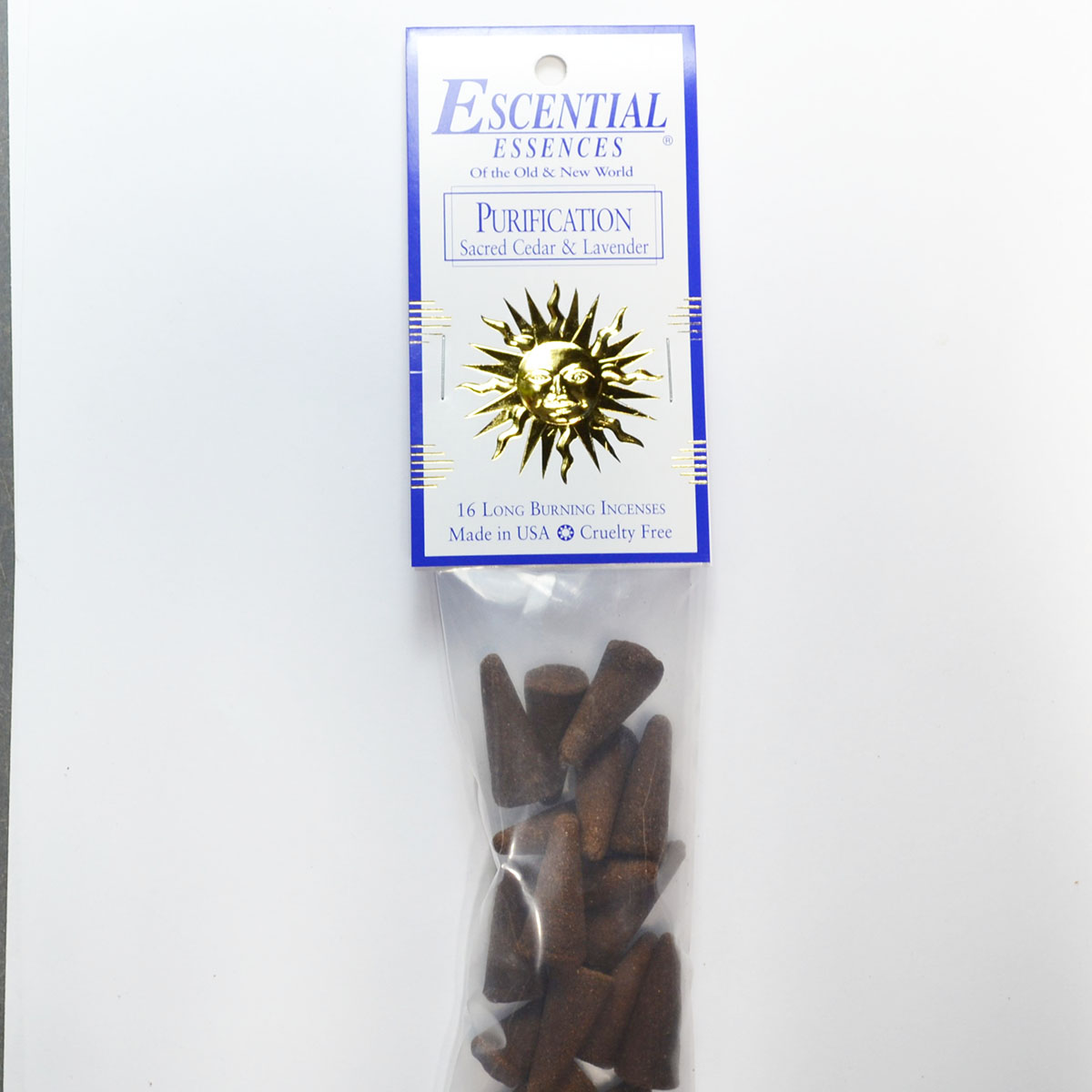
Purification Incense Cones
$6.55
Spirit Chaser of Cedar and Lavender
A cedar and lavender cone blend made for purification, burned to clear the light body, lift the spirit and chase away unwanted spirits.
Quick Uses
- Chase Spirits: Burn a cone in a room that feels haunted or heavy.
- Clear the Aura: Stand in the smoke and let it pass over your whole body.
- Uncross: Burn one with a white candle after removing a curse.
How to Use It
Witchcraft & Folk Magick
- Burn one in each room of a new home before moving your things in.
- Light a cone and pass it over yourself from head to feet after a long day around other people.
Hoodoo & Rootwork
- Burn it after an uncrossing bath, standing in the smoke while you dry off.
- Light a cone while you sweep the house from the back to the front door to drive out bad energy.
Ceremonial & Occult Magick
- Use it before the Lesser Banishing Ritual of the Pentagram to clear the temple.
- Burn a cone during exorcism rites of a space, carried to each quarter.
Demonology & Black Magick
- Burn it to banish unwanted spirits after evocation, or to chase out spirits that have overstayed their welcome.
- Light one to purify yourself after curse or hex work.
A Simple Working
- On a Saturday morning, open all windows in the house.
- Light a white chime candle in the main room.
- Light a Purification cone and set it in a dish.
- Carry the dish to each room, starting at the back of the house.
- In each room say the spirits that do not belong must go.
- End at the front door and lay a line of sea salt across the threshold.
- Close the windows once the cone burns out.
Pairs Well With
- White Chime Candles: For purification and uncrossing.
- Sea Salt: To lay across the threshold.
- Cedar Tips: To burn or hang for protection.
- Uncrossing Bath Salts: For a full cleansing.
What You Receive
One package of 16 long-burning Purification (cedar and lavender) scented incense cones, made in the USA from cruelty-free, cosmetic-grade ingredients.
Origin & Lore
This blend of cedar and lavender is made for purification and chasing away spirits. Cedar has been burned for cleansing and protection in many cultures.
Cedar of Lebanon was used to build Solomon’s Temple, and Egyptians used cedar oil in embalming. Many Native American peoples burn cedar for purification and prayer, and lavender has long been a European herb of cleansing and protection.
Did You Know?
The cedar tree on the flag of Lebanon is a cedar of Lebanon, the same species described in the building of Solomon’s Temple.
Related products


