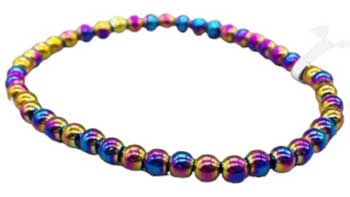
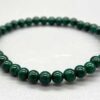
Rainbow Hematite Stretch Bead Bracelet (4mm)
$7.65
Iridescent Iron for Grounding
A stretch bracelet of 4mm rainbow hematite beads with a shifting prism sheen, worn by practitioners to stay grounded and to soak up negativity through the day.
Quick Uses
- Grounding: Wear it after ritual or trance work to bring yourself firmly back to the everyday.
- Absorb Negativity: Put it on before entering a tense meeting or crowded place.
- Mars Courage: Wear it on a Tuesday when you need backbone for a confrontation.
- Reset: Bury it in a pot of earth overnight when it feels heavy, then wear it again.
How to Use It
Witchcraft & Folk Magick
- Pass it through rosemary smoke before wearing, then set it on a stone overnight to ground it.
- Wear it while doing hedge work or journeying, as an anchor to the body.
Hoodoo & Rootwork
- Keep it in a small dish of salt by the door when not worn, so it is cleared and ready.
- Dress the beads with a drop of Fiery Wall of Protection oil before a hard day.
Ceremonial & Occult Magick
- Work it as a Mars talisman, since iron is Mars’ metal in the classical planetary scheme.
- Wear it while closing a ritual, using its weight as the signal to earth any excess energy.
Demonology & Black Magick
- Wear it during evocation as an iron ward on the body, an old protection against unruly spirits.
- Hold it during banishing at the close of spirit work, then cleanse it in salt.
A Simple Working
- Pour a small mound of sea salt onto a white saucer.
- Light a black or white chime candle beside it.
- Hold the bracelet and name the heaviness you want it to draw away from you.
- Lay the bracelet on the salt and let the candle burn down.
- Tip the salt out at a crossroads or into running water.
- Wipe the beads and wear them again as a fresh ward.
Pairs Well With
- Black Tourmaline: A second protective stone for doubled warding.
- Sea Salt: For clearing the beads between wearings.
- Black Obsidian: Deepens the grounding and shielding work.
- Rosemary: A smoke or herb for quick cleansing before you put it on.
What You Receive
One stretch bracelet strung with 4mm rainbow hematite beads.
Origin & Lore
Hematite is an iron oxide and one of the main ores of iron. Its name comes from the Greek word for blood, because the stone leaves a red streak when scraped or powdered. Ancient peoples ground it into red ochre for painting and burial rites, and Roman soldiers were said to carry it into battle for courage.
Because iron has a long reputation in European folklore for repelling spirits and ill wishes, hematite is still worn as a grounding and protective stone.
Did You Know?
The name hematite comes from the Greek haima, meaning blood, after the red streak the stone leaves when scraped.
Related products