


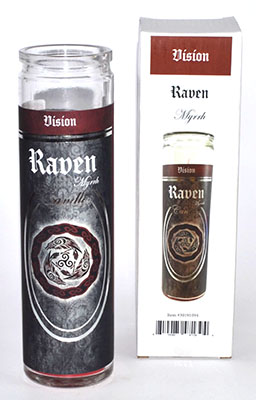
Raven 90-hour jar candle (myrrh)
$16.45
A raven flame for vision
A myrrh-scented 90-hour jar candle with raven artwork, burned for vision, divination, spirit contact and courage in the dark.
Quick Uses
- Divination: light it before tarot, runes or a scrying mirror and ask the raven for a clear message.
- Ancestors: burn it on the ancestor altar as a light for the messenger between the living and the dead.
- Shadow work: sit with it when facing something hidden in yourself, writing down what comes up.
- Saturn: burn it on a Saturday for workings of wisdom, patience and endings.
How to Use It
Witchcraft & Folk Magick
- Divination: light it before reading tarot, runes or a scrying mirror and ask the raven to bring back a clear message.
- Ancestor work: burn it on the ancestor altar beside photographs, as a light for the messenger between the living and the dead.
- Shadow work: sit with it when you need to face something hidden in yourself, writing down what comes up.
Ceremonial & Occult Magick
- Saturnian work: crows and ravens are counted among Saturn’s creatures in Renaissance correspondences, and the candle suits Saturday workings for wisdom, patience and endings.
- Norse practice: those who honour Odin light it with a short offering of mead or ale before rune casting.
A Simple Working
- On a Saturday night, set the candle beside a bowl of water or a black scrying mirror.
- Light a disc of charcoal and sprinkle a little myrrh on it.
- Light the candle and ask your question aloud, once.
- Gaze softly into the water or mirror, letting the flame reflect in it.
- Write down every image, word or memory that comes, without judging it.
- Snuff the candle, pour the water outside, and read your notes the next morning.
Pairs Well With
- Myrrh resin: to burn on charcoal beside the candle.
- A black scrying mirror: for vision work in its light.
- Rune set: for Odin’s own form of divination.
- A raven feather (replica): as the bird’s token on the altar.
What You Receive
One myrrh-scented jar candle with raven artwork, approximately 90 hours of burn time, supplied boxed.
Origin & Lore
Ravens are clever, long-lived carrion birds, and wherever people have lived beside them they have been read as messengers between this world and the next. They were birds of augury in Rome, companions of Odin in the north and a shape of the Morrigan in Ireland. Myrrh, the scent here, is a bitter, dark resin long used in funerary rites and for deep meditation.
Every morning, Norse myth says, Odin sent his two ravens Huginn and Muninn, Thought and Memory, out across the world, and every evening they came back to whisper what they had seen.
Huginn and Muninn are named in the Eddic poem Grimnismal, where Odin says he fears for Thought, but fears more for Memory. In Irish myth the Morrigan takes the form of a crow or raven on the battlefield and settles on the dying Cu Chulainn. Roman augurs counted the raven among the birds whose calls and flight revealed the will of the gods.
Did You Know?
The Tower of London keeps at least six ravens in residence, after the legend that the kingdom will fall if they ever leave.
| Weight | 1.8 lbs |
|---|
Related products


