Rider-Waite Tarot Deck & Book by Pamela Colman Smith
$28.55
The classic tarot with Waite’s own key
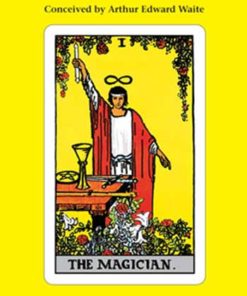
A complete set for learning and reading the most famous tarot deck, with the full Waite deck, The Key to the Tarot and a divinatory chart.
Quick uses
- Learning: study the deck alongside Waite’s own book.
- Daily draw: pull one card each morning for guidance.
- Spirit work: use readings to communicate with spirits.
In stock
How to Use It
Divination & Spirit Work
- This set contains the full Waite deck, The Key to the Tarot and a divinatory chart, giving a complete foundation for reading.
- The 160 page book by A.E. Waite, with a foreword by Liz Greene, lets you learn the cards in the words of the man who designed them.
- Use the divinatory chart as a quick reference while practising spreads.
Ceremonial & Occult Magick
- The deck draws on the symbolism of the Hermetic Order of the Golden Dawn, and its Major Arcana can be meditated upon as gateways in Qabalistic pathworking.
Necromancy & Ancestor Work
- Lay a card for each ancestor you are calling and read the spread at the shrine.
- Ask your dead questions and draw a card for each answer.
Demonology & Black Magick
- Practitioners use tarot to confirm a spirit’s presence and its answer during evocation.
- Draw cards to ask a spirit whether a pact or offering has been accepted, and keep the deck on the spirit’s altar between workings.
- The Devil card in particular is often meditated upon in Luciferian and left-hand path work.
A Simple Working
- Cleanse the deck with incense and handle each card to bond with it.
- Read Waite’s notes for one card each day until all 78 are familiar.
- Lay out a three card spread for a question that matters to you.
- Compare your reading with the divinatory chart and the book.
- Record the reading and its outcome in a journal.
Pairs Well With
- Tarot cloth: to lay your spreads on.
- Purple candles: for psychic work.
- Amethyst: to clear the mind.
- Divination journal: to track readings.
- Mugwort incense: to open the inner sight.
What You Receive
One Rider-Waite deck and book set, containing the full Waite deck of 78 cards, The Key to the Tarot (a 160 page book by A.E. Waite with a foreword by Liz Greene), a divinatory chart and an instructional booklet. Cards measure 2.75″ x 4.75″.
Origin & Lore
The deck was first published in 1909 by William Rider & Son, designed by A.E. Waite and illustrated by Pamela Colman Smith, both members of the Golden Dawn.
It was the first widely used deck to give every Minor Arcana card a full illustrated scene, which shaped nearly all tarot that followed.
Did You Know?
Pamela Colman Smith was paid a flat fee for the 78 paintings and received no royalties, though her art became the most reproduced tarot imagery in the world.
| Weight | 1.00 lbs |
|---|
Related products