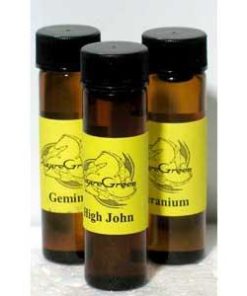
Rose Geranium oil
Price range: $6.55 through $63.75
A rosy leaf for peace at home · Available in 3 sizes
Rose geranium oil carries the green, rosy scent of a South African pelargonium, worked for love, household peace, beauty and gentle protection.
Quick Uses
- Love: dress a pink candle for kindness and warmth between partners.
- Household peace: add a few drops to a floor wash or a kitchen sachet to settle a tense home.
- Protection: anoint the windowsill, where geraniums have long stood guard.
- Venus work: put a drop on a copper talisman or green candle on a Friday in the hour of Venus.
How to Use It
Witchcraft & Folk Magick
- Love and sweetness: dress a pink candle with rose geranium for kindness and warmth between partners.
- Household peace: a few drops in a floor wash or on a sachet in the kitchen to settle a tense home.
- Protection: geraniums have long been kept on windowsills and by doors as guardian plants; anoint the sill with the oil to the same end.
Ceremonial & Occult Magick
- Venusian work: a drop on a copper talisman or a green candle on Friday in the planetary hour of Venus.
- Spiritual healing: dress a blue or pink candle for someone grieving or recovering.
A Simple Working
- Choose the windowsill nearest your front door.
- Wipe it clean with a cloth dampened with water and a drop of rose geranium oil.
- Place a small dish of sea salt on the sill.
- Dress a pink tealight with the oil and set it beside the dish.
- Light it and say who and what is welcome in the house.
- When it burns out, leave the salt for seven days, then throw it outside.
Pairs Well With
- Rose oil: for a deeper, true-rose love blend.
- A pink tealight: for gentle household and love work.
- Sea salt: on windowsills in protection work.
- Lavender: another soft herb for peace in the home.
What You Receive
Rose Geranium oil in 2 dram, 1 oz and 16 oz (1 lb) sizes.
Origin & Lore
Rose geranium is a scented pelargonium (Pelargonium graveolens and related plants) native to southern Africa. It reached Europe in the seventeenth and eighteenth centuries, and its leaves were distilled as an affordable substitute for rose oil, laid in the bottom of cake tins and jelly jars, and kept as fragrant parlour plants.
The scent of rose geranium lives in the leaf, not the flower: brush past the plant on a windowsill and the room fills with rose.
In the Victorian language of flowers, rose-scented geranium was given meanings of preference and affection. Cunningham assigns geraniums to Venus and Water, and scented pelargoniums were once grown on Réunion in such quantity that ‘Bourbon geranium’ became a perfume grade of its own.
Did You Know?
Garden ‘geraniums’ are not true geraniums: the French botanist L’Héritier separated them into the genus Pelargonium in 1789, a name from the Greek for stork, after their beak-shaped seed pods.
| Weight | N/A |
|---|---|
| Size | 2 dram, 1 oz, 16 oz |
Related products