

Rosemary Leaf whole (Rosmarinus officinalis)
Price range: $3.25 through $17.55
The herb of remembrance and protection · Available in 3 sizes
Rosemary, the herb of remembrance and protection, burned in place of costly incense, hung at the door and used for cleansing, memory and love.
Quick Uses
- Cleansing: burn it as a cleansing incense in place of frankincense.
- Protection: hang it at the door or plant it by the house for protection.
- Study: carry it while studying and in exams, or place it under the pillow against bad dreams.
- Remembrance: lay it on graves and ancestor altars as a herb of remembrance.
How to Use It
Witchcraft & Folk Magick
- Burned as a cleansing incense, an old substitute for frankincense.
- Hung at the door or planted by the house for protection.
- Placed under the pillow against bad dreams, or carried while studying and in exams.
- Laid on graves and ancestor altars as a herb of remembrance.
Hoodoo & Rootwork
- Used in baths and floor washes for cleansing and protection.
- Associated with women’s power in the household: folk sayings hold that where rosemary thrives, the woman rules.
Ceremonial & Occult Magick
- Used in solar incenses and in purification of tools and ritual space.
A Simple Working
- Take a few sprigs’ worth of rosemary leaf and a fireproof dish with a charcoal disc.
- Light the charcoal and add a pinch of rosemary and a pinch of frankincense.
- Starting at the front door, carry the smoke through each room clockwise.
- Pay attention to corners, doorways and windows.
- Return to the front door and state that the house is clean and guarded.
- Hang a small sprig or packet of rosemary above the door.
Pairs Well With
- Frankincense: the classic partner for cleansing smoke.
- Bay leaf: another protective solar herb.
- Lavender: softens rosemary in love and sleep blends.
- Salt: strengthens cleansing baths and washes.
What You Receive
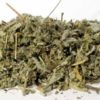
Whole dried rosemary leaf, available in 1 oz, 4 oz and 1 lb.
Origin & Lore
Rosemary is an evergreen shrub of the Mediterranean coast, its name from the Latin ros marinus, dew of the sea. It was a cooking herb, a strewing herb, and was burned in sickrooms and churches; in France it was burned with juniper in hospital wards to sweeten the air.
Greek students wore rosemary garlands while they studied, believing the herb helped them remember what they learned.
Ophelia’s line in Hamlet, “There’s rosemary, that’s for remembrance”, reflects its long use at weddings and funerals in England. A Spanish legend says the Virgin Mary spread her blue cloak over a white-flowered rosemary bush while resting on the flight into Egypt, and the flowers turned blue.
Did You Know?
In 2017 botanists moved rosemary into the sage genus, so its current scientific name is Salvia rosmarinus.
| Weight | N/A |
|---|---|
| Size | 1 oz, 4 oz, 1 lb |
Related products