



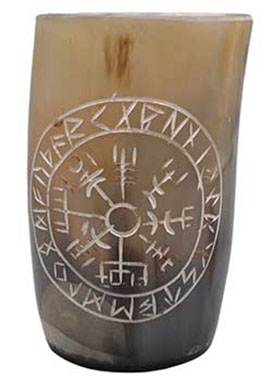
Rune and Vegvisir Buffalo Horn Mug (4″)
$16.45
A Norse Offering Horn
A buffalo horn mug carved with the Vegvisir and runes, used by Norse pagans for toasts, blots and offerings to gods and ancestors.
Quick Uses
- Sumbel Toast: Raise it in a round of toasts to the gods, ancestors and your own oaths.
- Blot Offering: Fill it with mead or ale and pour it out on the earth as an offering.
- Wayfinder Altar: Set it on your altar before a journey to ask for safe guidance.
How to Use It
Witchcraft & Folk Magick
- Use it to hold the offering of mead or ale for the land spirits at the turning of the seasons.
- Set it on a hearth altar with a candle to ask for household luck.
Ceremonial & Occult Magick
- Use it as a runic vessel, chanting the rune names over the liquid before an offering.
Demonology & Black Magick
- Offer mead in it to a chthonic or wandering spirit during spirit contact, then pour it out to close the work.
- Lay a written oath to a spirit beneath it and fill it at each new moon until the oath is kept.
A Simple Working
- Before a journey or new venture, fill the horn with mead or apple juice.
- Light a candle and hold the horn up, tracing the Vegvisir with your finger.
- Ask the gods and your ancestors to guide your path.
- Speak your goal as an oath over the horn.
- Pour the offering out on the earth outside.
- Rinse the horn and keep it on your altar until you return.
Pairs Well With
- Mead: The traditional offering for Norse rites.
- Elder Futhark Runes: To pair with the horn in blots and readings.
- Rune Altar Cloth: To dress a Norse altar.
- Pine Incense: For a northern forest scent in ritual.
What You Receive
One buffalo horn mug, about 4 1/4″ tall, carved on the front with a Vegvisir (Viking compass) and rune symbols.
Origin & Lore
Horn cups were used for feasting and ritual toasts in the Norse and Germanic world, most famously in the sumbel, where a horn passed around the hall for toasts to the gods, the dead and solemn vows.
The Vegvisir, often called the Viking compass, comes from a nineteenth-century Icelandic manuscript of magical staves, where it is said to keep its bearer from losing their way in storms or bad weather.
Did You Know?
The Vegvisir is first recorded in an Icelandic manuscript of the 1800s, long after the Viking age.
Related products


