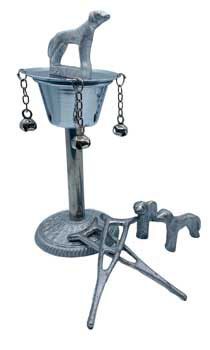
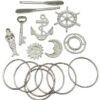
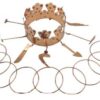
San Lazaro (Babalu Aye) Aluminium Tools (5-Piece, about 9″)
$38.45
The father of the earth who walks with the sick
An aluminium 5-piece tool set for San Lazaro, the orisha Babalu Aye.
Quick uses
- Wellbeing: pray before the tools for spiritual strength for the sick.
- Feast day: keep a vigil on 17 December.
- Altar: dress with burlap and a purple candle.
How to Use It
Lucumí & Orisha Devotion
- In Lucumí practice the herramientas (tools) of Babalu Aye live with the orisha in their vessel, as the emblems of illness, healing and compassion for the outcast; they are consecrated and fed along with the orisha rather than used loose.
- Devotees who are not initiated often keep a set on a simple devotional altar to Babalu Aye, with a white cloth, a glass of water and a candle, as a respectful focus for prayer.
- Clean the pieces with a soft cloth and keep them together; the set is understood as one emblem, not separate charms.
Witchcraft & Folk Magick
- Keep the tools on a purple or burlap cloth as a focus when praying for the spiritual wellbeing of the sick.
- Use them on 17 December, San Lazaro’s feast, for a vigil of thanks or petition.
A Simple Working
- Lay a burlap or purple cloth on your altar.
- Set the tools at the centre with a glass of water.
- Light a purple candle.
- Pray for the person in need of spiritual strength, naming them clearly.
- Leave toasted corn or bread as a humble offering and clear it the next day.
Pairs Well With
- Purple candles: San Lazaro’s colour.
- Burlap (sackcloth): the traditional cloth of Babalu Aye.
- Toasted corn and bread: humble offerings.
- Basil: used in cleansings for him.
What You Receive
A 5-piece aluminium tool set for Babalu Aye / San Lazaro, approximately 9″ tall.
Origin & Lore
Babalu Aye is the orisha of illness, plague and healing, the father of the earth who both sends and lifts disease. In Cuba he is merged with Saint Lazarus, the beggar on crutches with his dogs, and is one of the most beloved figures of the island.
Tens of thousands of pilgrims walk to the shrine of El Rincón, near Havana, every 17 December, some on their knees, to give thanks.
Did You Know?
Babalu Aye’s name is often said to mean “father, lord of the earth”, and his sacred dogs are part of almost every image of San Lazaro.
Related products