



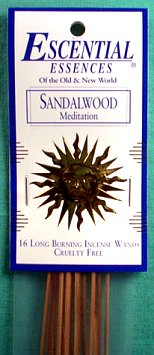
Sandalwood Incense Sticks (16 Pack)
$6.55
The Classic Meditation Wood
A sandalwood stick incense, the soft, creamy wood scent that practitioners burn for meditation, intention setting and spiritual healing.
Quick Uses
- Meditation: Light one stick at the start of each sitting so the scent cues your mind.
- Set Intent: Burn a stick while you write a goal and read it aloud three times.
- Blessing: Pass ritual tools through the smoke to bless them before first use.
How to Use It
Witchcraft & Folk Magick
- Burn a stick at full moon while writing intentions for the coming month.
- Light one when consecrating a new altar cloth or wand.
- Burn a stick while you dress a wand or athame with oil on its first use, asking that it serve only your true will.
Hoodoo & Rootwork
- Smoke a protection mojo bag in sandalwood before feeding it with oil.
- Burn it while you write a petition on brown paper for a spiritual healing working.
Ceremonial & Occult Magick
- Use it as a general temple incense during invocation and quiet contemplation.
- Burn it while consecrating a talisman, its gentle wood scent suits most planetary work.
Demonology & Black Magick
- Burn sandalwood when you open sigil work, as a neutral, steadying smoke that many spirits accept.
A Simple Working
- Write one clear intention on a strip of paper.
- Light a white candle and one sandalwood stick.
- Hold the paper in the smoke while you read it aloud.
- Sit in silence for the length of the stick’s burn.
- Fold the paper and place it under the candle holder.
- When the candle is spent, keep the paper on your altar until the intention is met.
Pairs Well With
- Frankincense Resin: A classic temple partner for deeper ritual.
- Mala Beads: For counting mantras while the stick burns.
- Clear Quartz: Holds and amplifies a stated intention.
- White Candle: For blessing and general spiritual work.
What You Receive
One pack of 16 sandalwood incense sticks, strongly scented and made in the USA.
Origin & Lore
Sandalwood has been burned in temples and shrines of India for many centuries. Santalum album heartwood is ground into paste for marking the forehead in Hindu worship and is used in Buddhist temples throughout Asia as an offering incense.
Its value made it a trade good carried across the Indian Ocean, and in Western occultism it became a standard incense for meditation and consecration. Sandalwood remains one of the most common bases for stick incense, and its scent sits quietly under other ingredients, which is part of why it pairs so easily with resins and florals.
Did You Know?
Indian sandalwood is a hemiparasitic tree: its roots attach to the roots of neighbouring plants to draw water and nutrients.
Related products


