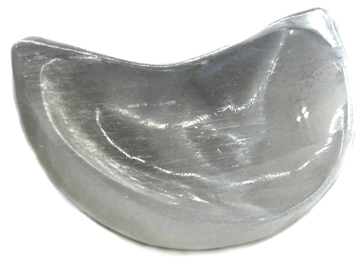
Selenite Half Moon Bowl (4″)
$16.45
A Crescent Bowl for Moon Work
A crescent-moon selenite bowl just under 4″ across, made for lunar altars, moon rituals and holding the stones and jewelry used in psychic work.
Quick Uses
- Moon Altar: Make it the centerpiece of your lunar altar on full and new moons.
- Psychic Stones: Keep labradorite or moonstone in it before readings.
- Charging Dish: Set it in moonlight with your charms in it on the full moon.
How to Use It
Witchcraft & Folk Magick
- On each full moon set it on a windowsill with your charms and stones in it to charge overnight.
- Keep it on your moon altar holding moonstone and white flowers through the lunar month.
Hoodoo & Rootwork
- Set a white candle beside it on Monday nights for spirit messages and second sight.
- Hold a dressed lodestone for intuition in it between uses.
Ceremonial & Occult Magick
- Use it as a lunar vessel on a Monday altar during the hour of the moon.
- Rest your lunar talismans in it between their consecration and use.
Demonology & Black Magick
- Hold the stones you use in scrying for spirits in it, so they stay clear between sessions.
- Set it on a necromantic altar with a piece of bone or grave dirt beside it when calling the dead by moonlight.
A Simple Working
- On the night of the full moon, place moonstone or labradorite in the bowl.
- Set it in a window where the moonlight falls.
- Light a white tealight candle beside it.
- Ask the moon to sharpen your sight.
- Leave the stones there until morning.
- Hold one in your hand during your next reading.
Pairs Well With
- Moonstone: A lunar stone for psychic work.
- Labradorite: A favorite of readers and seers.
- Mugwort: A dream and divination herb for the altar.
- White Tealight Candles: For moon rituals.
What You Receive
One crescent-moon-shaped selenite bowl, almost 4″ across the lip and almost 1 1/4″ tall. Natural cracks and lines run through each piece.
Origin & Lore
Selenite takes its name from Selene, the Greek goddess of the moon, a nod to its soft, pearly glow. It is a clear crystalline form of gypsum, and much of the selenite carved for altar ware today comes from Morocco.
The crescent has marked moon goddesses for thousands of years, from Selene and Artemis to Diana, often shown wearing a crescent on the brow. A selenite crescent joins the stone’s lunar name with that ancient sign.
Did You Know?
Selene, the Greek moon goddess, was said to drive a silver chariot across the night sky.
Related products