


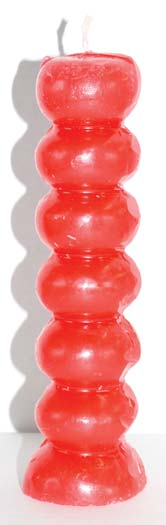


Seven knob candle, 6 1/2″
$8.75
The rootworker’s wishing candle · Available in 2 sizes
A candle of seven stacked knobs, burned one knob a day to work a single desire seven times over.
Quick Uses
- Seven days: dress the candle once, then burn one knob each day, snuffing it out when the knob is gone.
- Wishes: write one wish on a slip of paper for each knob, or repeat the same wish seven times.
- Love: dress a red candle with a love-drawing oil and set a photo or name-paper beneath it.
- Cleansing: burn a white candle over seven days while you clear the house, one room per knob.
How to Use It
Hoodoo & Rootwork
- One knob per day: dress the candle once, then burn one knob each day, snuffing (never blowing) it out when the knob is gone.
- Seven wishes: write one wish on a slip of paper for each knob, or repeat the same wish seven times to build it up.
- Red for love: dress a red candle with a love-drawing oil and set a photo or name-paper beneath the holder.
Witchcraft & Folk Magick
- Knot magick in wax: each knob works like a knot in a cord, releasing a piece of the spell as it burns.
- White for cleansing: burn a white candle over seven days while you clear and wash the house, one room or task per knob.
A Simple Working
- Write your wish in one plain sentence on a small square of brown paper.
- Dress the candle with a few drops of olive oil, working from base to wick.
- Set it in a fireproof dish on top of the folded paper.
- Light it, read the wish aloud, and let the top knob burn down.
- Snuff it out with your fingers or a snuffer once that knob is gone.
- Repeat each day at the same hour until all seven knobs are burned.
- Fold the wax remains into the paper and keep it, or bury it if the wish was to end something.
Pairs Well With
- Brown paper: for the written wish beneath the candle.
- A candle snuffer: snuffing rather than blowing keeps the work intact between knobs.
- Love-drawing oil: for dressing the red candle.
- A fireproof dish: to catch the wax over a week of burns.
What You Receive
A 6 1/2″ seven knob candle in red or white. Moulded candles can vary slightly in size, shape and colour and may need levelling at the base to stand straight.
Origin & Lore
Seven knob candles are a 20th-century American candle-shop form, sold to rootworkers and spiritual-supply customers as wishing candles. The candle is moulded into seven rounded sections, each one burned separately so the work is paced out over a week. Red is chosen for love and desire, white for blessing, clearing and general wishes.
Seven knobs, seven days, seven wishes: the shape of this candle is the instruction for using it.
Seven carries weight in almost every tradition the craft draws on: seven classical planets, seven days of the week, the seventh son of a seventh son in British and American folk healing, and the many sevens of the Bible. Rootwork candle-shop forms such as this one gave that number a shape that could be burned in stages.
Did You Know?
In Latin and most Romance languages the days of the week are named after the seven classical planets: Monday for the Moon (lunes), Tuesday for Mars (martes), Wednesday for Mercury (miércoles), and so on.
| Weight | N/A |
|---|---|
| Option | Red, White |
Related products


