



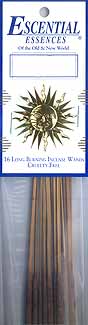

Shamanwood Incense Sticks (16 Pack)
$6.55
Smoke for Meeting Your Guide
A stick incense blended for spirit guide work, burned by practitioners when they sit to meet, thank or question the guides who walk with them.
Quick Uses
- Guide Contact: Light a stick before a guided meditation to meet your spirit guide.
- Journey Work: Burn one while drumming or listening to a steady drumbeat for inner journeying.
- Thanks Offering: Light a stick in gratitude whenever you feel a guide has helped you.
How to Use It
Witchcraft & Folk Magick
- Burn a stick before you pull a daily card and ask your guide to speak through the spread.
- Light one in a woodland setting or by a tree you feel connected to and sit in silence.
- Burn a stick when you go walking in a forest, carrying it in a safe holder to a spot where you sit and listen.
Hoodoo & Rootwork
- Burn it on the spirit shelf with a glass of water when you ask your guide for direction.
- Smoke a small cloth bag of personal items to dedicate it as a guide token.
Ceremonial & Occult Magick
- Use it during a rising on the planes or pathworking exercise where you seek an inner contact.
- Burn it while you scry in a black mirror for an image of your guide.
Demonology & Black Magick
- Offer it to a familiar spirit as a woody, grounding scent when you open regular communication.
A Simple Working
- Sit somewhere quiet and dim the lights.
- Light a white chime candle and one Shamanwood stick.
- Breathe slowly and picture a path leading into a forest.
- Walk the path in your mind until you meet someone waiting for you.
- Ask their name and one piece of guidance, then thank them.
- Return the way you came and write down everything in a journal.
Pairs Well With
- Frame Drum: A steady beat supports inner journeying.
- Black Mirror: For scrying while the smoke rises.
- Journal: Record what your guide shows you each time.
- Smoky Quartz: A grounding stone for returning from trance.
What You Receive
One pack of 16 Shamanwood incense sticks, strongly scented and made in the USA.
Origin & Lore
Shamanwood is a modern blend made for spirit guide work. It is not drawn from any one tradition’s recipe, and its name nods to the wide use of smoke in contacting spirits across many cultures.
Burning plants to open contact with the unseen is found the world over, from Siberia to the Americas. In contemporary witchcraft the spirit guide is usually understood as a helping spirit met in meditation or trance. Whatever your path, the core of guide work is the same: regular, quiet contact and a record of what comes through.
Did You Know?
The word shaman comes from the Evenki language of Siberia and reached Western Europe through Russian accounts in the seventeenth century.
Related products


