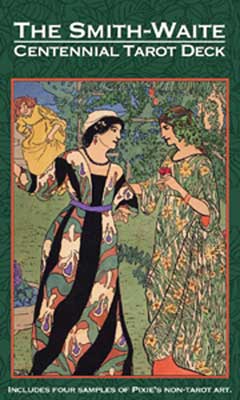
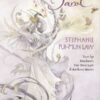
Smith-Waite Centennial Tarot Deck by Pamela Colman Smith
$26.35
The Original 1909 Tarot Restored
A faithful reproduction of the deck Pamela Colman Smith painted in 1909 under A. E. Waite’s direction, in muted colours, for readers and collectors who want the source of modern tarot.
Quick Uses
- Learning: Study the cards that nearly every modern tarot book is written around.
- Serious reading: Use it as your working deck for clear, traditional readings.
- Ritual focus: Stand a Major Arcana card on the altar as the image of a working.
- Collecting: Keep it as the reference point for every other RWS deck you own.
How to Use It
Witchcraft & Folk Magick
- Read with the traditional meanings that most tarot books are built on.
- Lay the card that shows the outcome you want under a candle as the focus of a spell.
Ceremonial & Occult Magick
- Use the Major Arcana for Golden Dawn style pathworking, since both Smith and Waite were members of that order.
- Meditate on the cards’ symbols as keys to the Kabbalistic correspondences Waite drew on.
Demonology & Black Magick
- Read before and after any evocation to see how the spirit is disposed and how the work has landed.
- Lay The Devil or another chosen trump as the focal image of a pact working or hex.
- Ask a spirit you work with to answer through the cards, drawing one per question inside the circle.
A Simple Working
- Cast a circle or simply clear your table.
- Light a black chime candle and burn a little frankincense.
- Name the working you are planning and ask the cards how to approach it.
- Shuffle and draw three cards: the situation, the obstacle, the counsel.
- Read them with the booklet if needed, then write the spread in your journal.
- Return to the same spread after the working to compare.
Pairs Well With
- Frankincense resin: for consecrating a new deck.
- A black chime candle: for readings around serious workings.
- A reading cloth: for a clean, dedicated surface.
- A blank grimoire: to record spreads and outcomes.
What You Receive
An 82-card deck: the standard 78 tarot cards plus 4 samples of Pamela Colman Smith’s non-tarot “Pixies” art, with a 16-page booklet. Card stack measures 4 3/4″ x 2 3/4″ x 1 1/8″. Scenes are printed in muted colours.
Origin & Lore
Tarot began in fifteenth-century northern Italy as a card game, the trionfi, played with an added suit of picture trumps. Its use as a tool for reading fate grew in eighteenth-century France and was shaped into the system most readers know by the occult orders of the late nineteenth century.
This deck reproduces the tarot Pamela Colman Smith created in 1909 under the direction of A. E. Waite, the pattern most modern decks still follow. Four extra cards show samples of her other, non-tarot artwork.
Did You Know?
The deck was first published in December 1909 by William Rider & Son of London, which is why it is so often called the Rider-Waite deck.
| Weight | 0.7 lbs |
|---|
Related products