



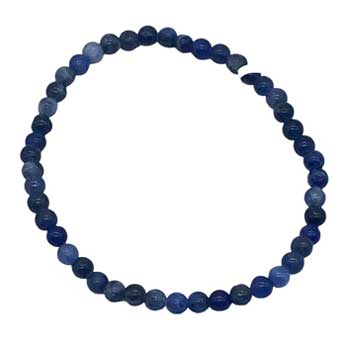
Sodalite Bead Bracelet (4mm)
$5.45
Clear Thought and True Speech
A 4mm sodalite bracelet, worn by practitioners for clear perception, communication, new ideas and meditation.
Quick Uses
- Meditation: Hold the bracelet as you sit and count one bead per breath.
- Communication: Wear it when presenting, teaching or writing.
- New Ideas: Wear it while brainstorming a spell or project.
- Endurance: Keep it on through long study or work sessions.
How to Use It
Witchcraft & Folk Magick
- Charge the bracelet on a Wednesday and wear it while writing your own spells and rituals.
- Lay it on your journal overnight before beginning a new creative project.
Hoodoo & Rootwork
- Wear it when you need to speak plainly in a family dispute, after passing it through rosemary smoke.
- Keep it with a petition for a fair hearing at work in a small blue bag.
Ceremonial & Occult Magick
- Use sodalite as a Mercurial stone in workings for eloquence, study and memory.
- Hold it during meditation to steady the mind before visualisation.
Demonology & Black Magick
- Wear it during spirit communication to help you hear clearly and record exactly what is said.
- Use it while writing out a spirit’s instructions after contact, keeping your recall clear.
A Simple Working
- On a Wednesday morning, set a light blue candle on your desk.
- Place a blank notebook in front of it and the bracelet on top.
- Light the candle and burn a little rosemary if you have it.
- Put the bracelet on and write a question about a project at the top of a page.
- Write freely for ten minutes without stopping.
- Underline any idea that stands out.
- Snuff the candle and act on one idea that day.
Pairs Well With
- Rosemary: A traditional herb for memory and clarity.
- Blue Candles: Suit communication and clear thought.
- Lapis Lazuli: A related blue stone for wisdom.
- Clear Quartz: Amplifies sodalite in meditation.
What You Receive
One sodalite bead bracelet with 4mm beads.
Origin & Lore
Sodalite is a rich royal blue mineral, often veined with white, that was used for carving and ornament long before it became a crystal working stone. In modern practice its traditional role is mental: it is worked for clear perception, logic, truthful communication and steady meditation, and is often paired with lapis lazuli, which it resembles.
Large deposits in Ontario, Canada became famous in the early twentieth century, and the stone was used decoratively in buildings and jewellery.
Did You Know?
Sodalite was named in 1811 for its sodium content, after it was first described from specimens found in Greenland.
Related products

All Jewelry


