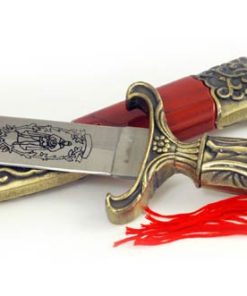
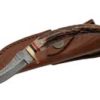
Stag Damascus Athame (8 1/2″)
$67.05
Damascus steel and deer horn for the wild craft
An athame is the double-edged ritual knife of witchcraft and ceremonial magick, used for casting, directing energy and commanding spirits.
Quick uses
- Sacred space: cast and close the circle.
- Spell work: charge oils and candles by pointing power through the blade.
- Spirit command: hold it to bind and dismiss spirits.
Out of stock
How to Use It
Witchcraft & Folk Magick
- The natural deer horn handle carries the energy of the wild, the hunt and the Horned One, suiting woodland and green witchcraft.
- Use it to cut the doorway in and out of the cast circle.
Ceremonial & Occult Magick
- The blade serves as the elemental weapon that directs the force of the will, banishing what is unwanted and holding the boundary of the rite.
Hoodoo & Rootwork
- Some workers drive a blade into the ground at a crossroads to fix a working in place before walking away.
- A knife kept under the doorstep is an old folk guard against unwanted visitors and spirits.
Demonology & Black Magick
- Practitioners point the athame at a spirit’s seal while reciting the conjuration, so the blade carries the force of the command.
- It is used to cut cords in severance and separation work, and to close a spirit’s door with a sign drawn in the air.
A Simple Working
- Consecrate the athame with the four elements: smoke, flame, water and salt.
- Hold it point upward and state your magickal name.
- Point it at a candle and push your intent down the blade into the wick before lighting.
- Let the candle burn while you hold the athame over your heart.
- Clean the blade and sheathe it in cloth until your next rite.
Pairs Well With
- Spell candles: to carve and charge with the blade.
- Cord: for binding and severance work.
- Pentacle: to rest the athame on the altar.
- Consecration oil: to maintain and bless it.
- Banishing incense: for closing sacred space.
What You Receive
One Stag Damascus athame with Damascus steel blade and deer horn handle. 8 1/2″ overall, 3 1/4″ blade.
Origin & Lore
The word athame appears in Gerald Gardner’s Wicca and is believed to have come from a corrupted spelling of the knife named in some manuscripts of the Key of Solomon.
Ritual blades are among the oldest magickal tools, used to mark sacred space and to threaten or dismiss spirits in the grimoire tradition.
Did You Know?
Damascus steel is famous for its wavy, watered pattern, which made blades instantly recognisable and highly prized across the medieval world.
| Weight | 0.40 lbs |
|---|
Related products