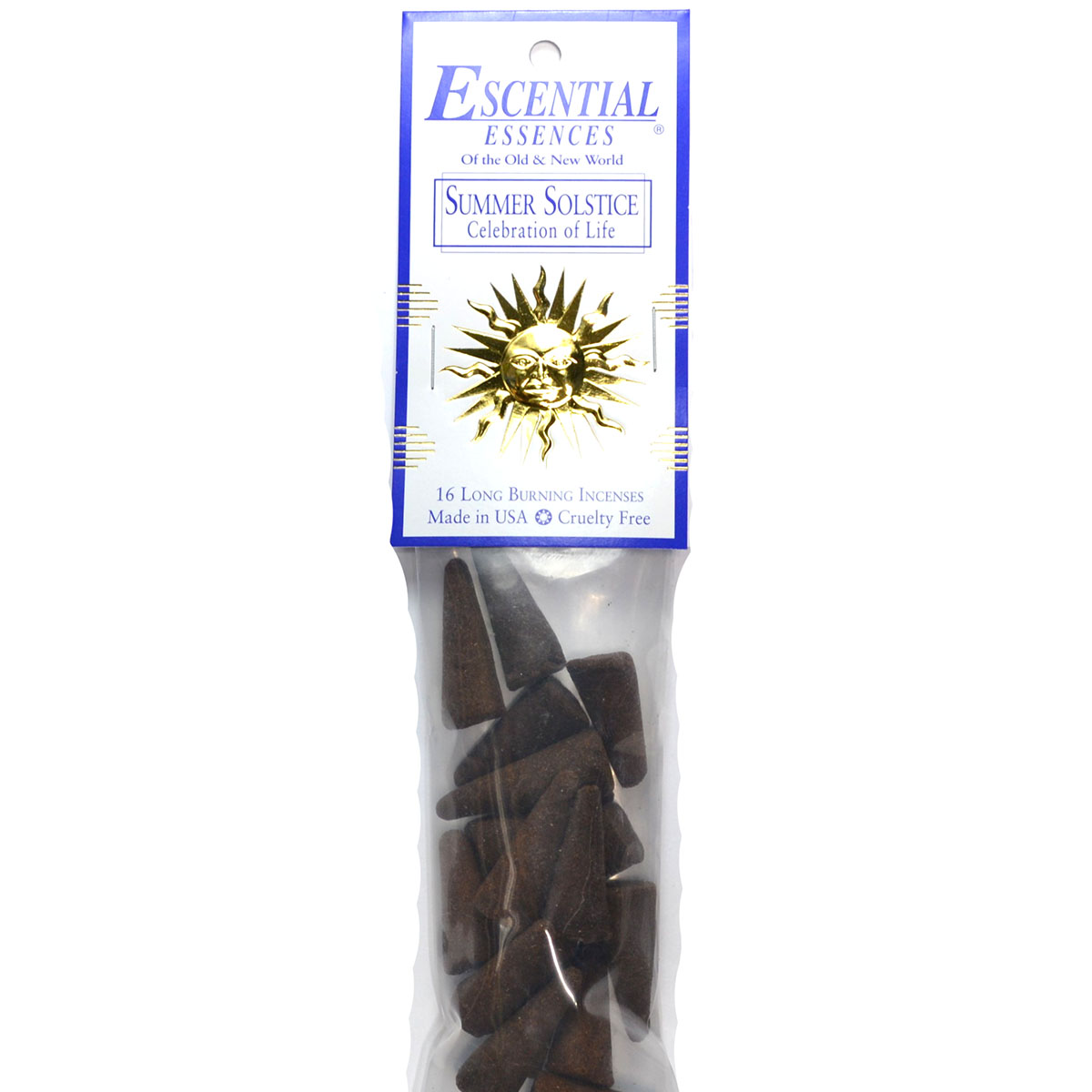
Summer Solstice Incense Cones
$6.55
Incense for Midsummer Celebration
A cone incense made to celebrate the longest day of the year, burned for feasting, merriment and solar power.
Quick Uses
- Midsummer Rite: Burn a cone at your Litha altar on the solstice.
- Solar Boost: Light one on a Sunday for success and confidence.
- Feast Blessing: Set a cone beside the table when friends gather to celebrate.
How to Use It
Witchcraft & Folk Magick
- Burn a cone at sunrise on the solstice and greet the sun at its height of power.
- Light one while weaving flower crowns or herb bundles for Midsummer.
Hoodoo & Rootwork
- Burn it over a gold candle dressed for success and recognition at work.
- Smoke a money petition at noon on a Sunday and carry it in your wallet.
Ceremonial & Occult Magick
- Use it in solar rites, burned at the four solar hours or at the zenith of the day.
- Burn it while invoking the Sun in a planetary working for honour and favour.
Demonology & Black Magick
- Offer it to a spirit of wealth or status when asking for advancement.
- Burn it during a pact renewal on the solstice to mark the year’s turning point.
A Simple Working
- On the summer solstice, or any Sunday at noon, light a gold or yellow candle.
- Light a Summer Solstice cone beside it.
- Write one goal you want to grow this season on a bay leaf or slip of paper.
- Hold it in the smoke and state the goal aloud.
- Leave it under the candle as it burns.
- Bury the leaf in a pot of sunny herbs or keep it on your altar until the goal is met.
Pairs Well With
- Gold Chime Candles: For solar and success work.
- Bay Leaves: To write wishes and goals on.
- Sunstone: A stone for vitality and confidence.
- St John’s Wort: The classic Midsummer herb.
What You Receive
One package of 16 long-burning incense cones in the Summer Solstice blend, made in the USA with cosmetic-grade ingredients and no animal testing. A celebration of life blend.
Origin & Lore
The summer solstice has been marked since ancient times as the peak of the sun’s power. In much of Europe the festival became St John’s Eve, celebrated with bonfires, dancing and the gathering of herbs believed to be at their strongest that night.
St John’s wort takes its name from this feast, and many folk customs held that herbs gathered on Midsummer Eve carried special protective power. Stonehenge is aligned to the sunrise of midsummer.
Did You Know?
St John’s wort is named for the Midsummer feast of St John, when it was traditionally gathered.
Related products