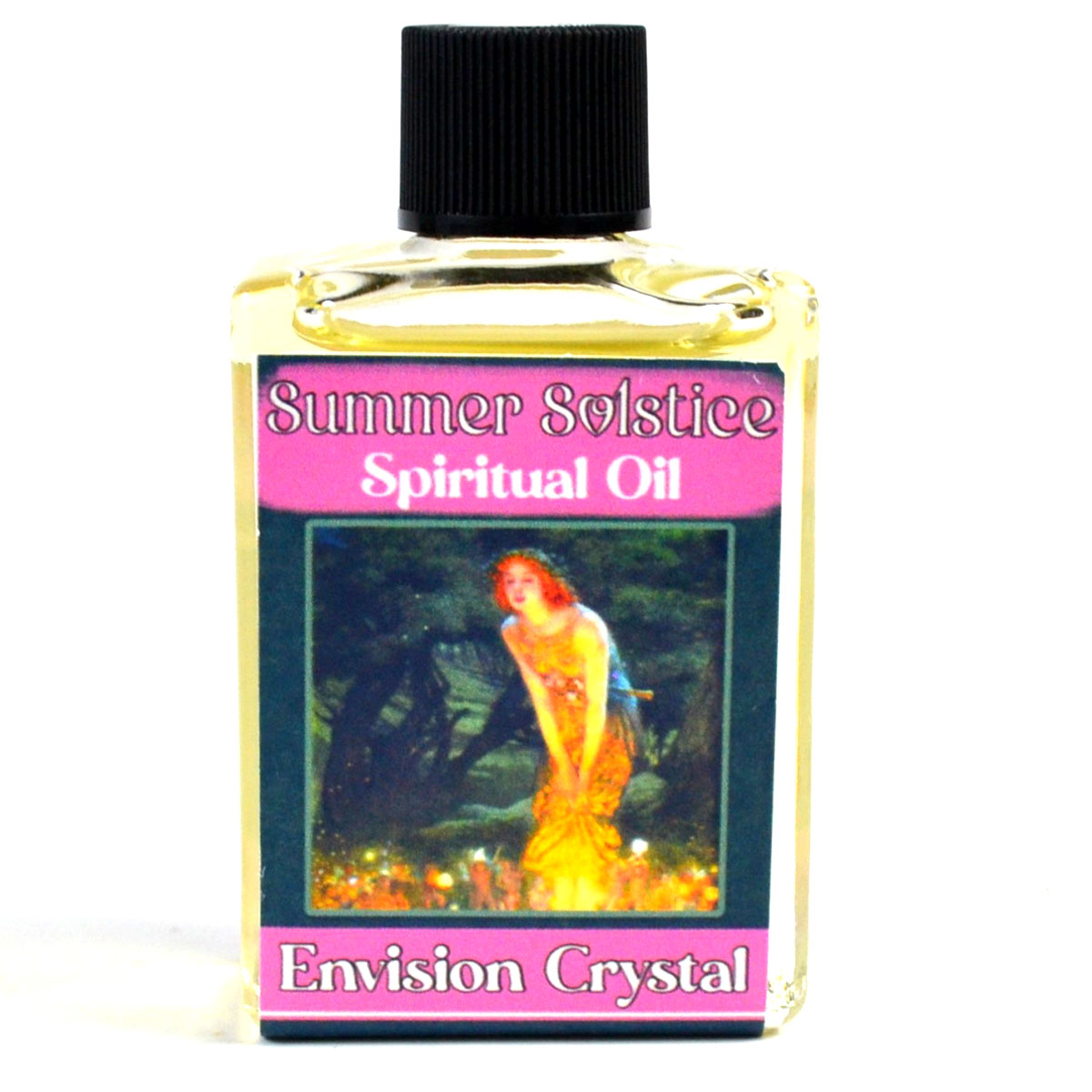
Summer Solstice oil
$15.35
A Midsummer oil for solar work
A sweet, floral oil for the Summer Solstice, worked at Midsummer rituals and solar spells for vitality, confidence and abundance.
Quick Uses
- Altar: anoint your Litha altar candles, especially a gold or yellow sun candle, at noon on the solstice.
- Herbs: dress the stems of herbs gathered on Midsummer, such as St John’s wort, before drying them.
- Wearing: wear a drop on the wrists for solstice celebrations or a sunrise vigil.
- Solar work: dress a solar talisman or Sun seal in the hour of the Sun on a Sunday near the solstice.
How to Use It
Witchcraft & Folk Magick
- Anoint your Litha altar candles, especially a gold or yellow sun candle, at noon on the solstice.
- Dress the stems of herbs you gather on Midsummer, such as St John’s wort, before drying them for the year ahead.
- Wear a drop on the wrists for solstice celebrations or a sunrise vigil.
Ceremonial & Occult Magick
- Dress a solar talisman or a Sun seal during the hour of the Sun on a Sunday close to the solstice.
- Anoint the brow and heart before a solar invocation or a ritual of rededication.
A Simple Working
- Rise before dawn on the solstice and set a gold or yellow candle on a sunny windowsill.
- Dress the candle with Summer Solstice oil, moving from base to wick.
- Light it as the sun comes up and name what you want to grow to full strength this year.
- Anoint a sprig of a sun herb such as St John’s wort or a sunflower head and lay it beside the candle.
- Let the candle burn while you sit with the light for a while.
- Dry the herb and keep it over the door until the next solstice.
Pairs Well With
- St John’s wort, gathered at Midsummer since medieval times.
- Sunflower seeds or petals, for solar abundance.
- Citrine or sunstone, stones of the Sun.
- A gold candle, for solar power and success.
- Chamomile, an old herb of the Sun and of quiet strength.
What You Receive
Summer Solstice oil, in a 4 dram bottle.
Origin & Lore
This is a seasonal oil made for the Summer Solstice, the high point of the solar year that modern pagans call Litha. Across Europe the solstice and St John’s Eve were nights of bonfires, gathering of herbs and love divination, when plants were believed to be at their strongest.
On the longest day the sun seems to stand still, and that is exactly what the word solstice means: sol, the sun, and sistere, to stand.
Midsummer fires were lit across Europe on St John’s Eve, 23 June, and people leapt the flames for luck and drove cattle between them for protection. In Scandinavia the night is still kept with maypoles and flower crowns, and young women once slept with seven kinds of flowers under the pillow to dream of a future husband.
At Stonehenge the axis of the monument is aligned on the midsummer sunrise, which is why crowds still gather there on the solstice morning.
Did You Know?
The name Litha comes from the early medieval writer Bede, who recorded that the Anglo-Saxons called the months around June and July Ærra Līþa and Æftera Līþa, “before Litha” and “after Litha”.
| Weight | 0.16 lbs |
|---|
Related products