

Tabula Mortem Spirit Board
$18.64
Spirit Board of the Dead
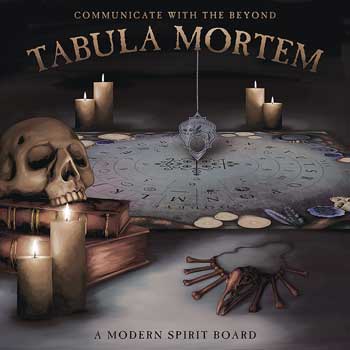
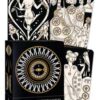
A spirit board that speaks through ancient symbolic cave runes and elemental energy, with a planchette that doubles as a pendulum and an 84-page guidebook.
Quick Uses
- Spirit contact: Place fingers lightly on the planchette and ask a spirit to spell or point.
- Pendulum mode: Hang the planchette as a pendulum for yes and no answers.
- Ancestor work: Call on your own dead by name at the ancestor altar.
- Study: Read the guidebook’s history of talking boards before your first session.
How to Use It
Witchcraft & Folk Magick
- Use at Samhain or the dark moon to ask questions of the dead.
- Work at the ancestor altar with offerings set out before the board.
Hoodoo & Rootwork
- Lay the board beside an ancestor plate and call your people by name.
- Ask the dead for guidance on a working before you begin it.
Demonology & Black Magick
- Use inside a cast circle as a means of communication with a spirit you have evoked.
- Hang the planchette as a pendulum over a seal or sigil sheet to ask a spirit’s yes or no.
- Ask the board which spirit is willing to work with you before attempting an evocation.
A Simple Working
- After dark, light a black candle and burn a little myrrh.
- Set a glass of water on the table as an offering.
- Lay the board flat and rest your fingertips lightly on the planchette.
- State aloud who you wish to speak with, and that only they are welcome.
- Ask simple questions and let the planchette move.
- When finished, thank the spirit and slide the planchette to close the session.
- Pour the water out and snuff the candle.
Pairs Well With
- A black chime candle: for spirit and necromantic work.
- Myrrh resin: a traditional incense of the dead.
- An obsidian scrying mirror: for spirit vision after a board session.
- A blank grimoire: to record every session and what was said.
What You Receive
One spirit board with a planchette that can also be used as a pendulum, and an 84-page guidebook covering the history of talking boards and how to work with the board.
Origin & Lore
Talking boards were made for one purpose: to let the dead and other spirits spell out messages. They grew from the Spiritualist movement of the mid-nineteenth century, when séance-goers used rapping, table-tipping and the planchette to receive words.
Tabula Mortem keeps that tradition but communicates through a system of ancient symbolic cave runes and elemental energy rather than a plain alphabet. Its planchette can also be hung as a pendulum.
Did You Know?
Elijah Bond filed the patent for the Ouija board in 1890 and it was granted in February 1891; the Kennard Novelty Company of Baltimore made the first boards.
| Weight | 1.4 lbs |
|---|
Related products