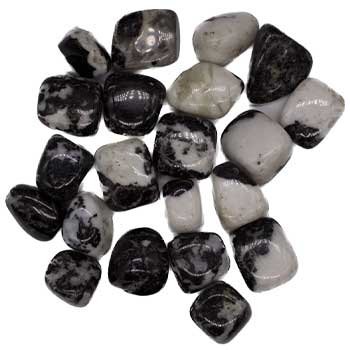
Tiger Calcite Tumbled Stones (1 lb)
$26.35
Banded Stone For Balance And Nerve
Tiger calcite is an orange-and-white banded calcite that practitioners use when they want both steadiness and boldness in the same working.
Quick Uses
- Balance Pair: Set a stone between a black and a white candle when working to steady a tense situation.
- Courage Token: Carry a stone in your pocket before a confrontation or a hard conversation.
- Altar Divider: Line stones along the centre of your altar to separate opposing workings.
How to Use It
Witchcraft & Folk Magick
- Place a stone on a family photograph to ask for calmer, more even tempers in the home.
- Use the stripes as a focus while chanting, tracing one band with your thumb per repetition.
Hoodoo & Rootwork
- Add a stone to a steady-work mojo with a whole nutmeg to keep a job from swinging up and down.
- Set a stone on a petition dressed with a little cinnamon for courage on the job.
Ceremonial & Occult Magick
- Use a stone as a marker for the middle pillar between two opposing forces in Qabalistic visualisation.
- Lay stones in a line across a working space to mark the boundary between active and receptive halves of a rite.
Demonology & Black Magick
- Hold a stone during evocation to stay steady and grounded while the spirit’s presence builds.
- Place a stone on a target’s name in a binding meant to freeze a situation in its current state.
A Simple Working
- Light one black chime candle and one white chime candle a hand’s width apart.
- Set a tiger calcite stone exactly between them.
- Name the two sides of the situation that are pulling against each other.
- Turn the stone slowly so its bands point from one candle to the other.
- Ask for the two sides to find a middle point.
- When the candles finish, carry the stone until things settle.
Pairs Well With
- Tiger’s Eye: a stronger, more protective striped stone for courage work.
- Black and White Chime Candles: for balance and two-sided workings.
- Nutmeg: a hoodoo staple for steady luck and work.
What You Receive
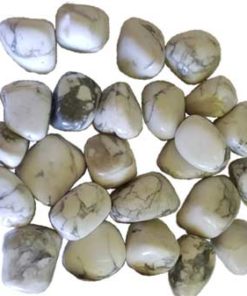
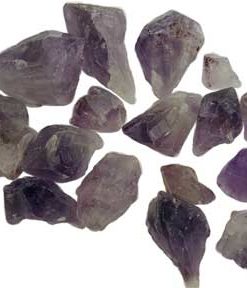
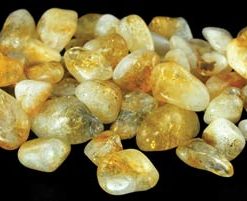
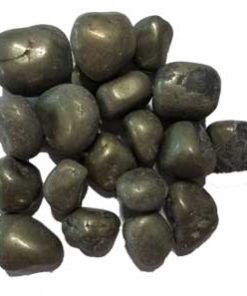
1 lb of tumbled tiger calcite from China, sold by weight only. Expect mostly small to medium stones, roughly 45 pieces per pound. Natural stones vary in banding, colour and shape.
Origin & Lore
Tiger calcite is a trade name for calcite that formed in layers, leaving alternating bands of orange and white. The banding records changes in the water and minerals present as the stone built up.
The same layered growth produces cave stalactites and travertine, which are also made of calcite.
Did You Know?
Travertine, a banded form of calcium carbonate, was the main stone used to build the outer walls of the Roman Colosseum.
Related products