


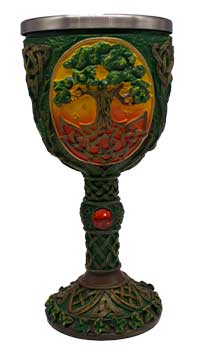

Tree of Life chalice, 7 1/4″
$41.75
A world-tree cup for ancestor rites
A hand-painted 7 1/4 inch Tree of Life chalice, a ritual cup for offerings, blessings and ancestor rites linked to the roots of the world tree.
Quick Uses
- Ancestor offerings: fill it with water or wine and set it before photographs of the dead overnight.
- Land offerings: pour the last of the blessed cup out onto the earth at the end of a rite.
- Growth workings: bless water in the cup and pour it on a plant tended as a token of your goal.
How to Use It
Witchcraft & Folk Magick
- Ancestor offerings: filled with water, wine or a favourite drink of the dead and set before their photographs overnight.
- Cakes and ale: drink is blessed and shared in the cup, then the last of it is poured out for the land.
- Growth workings: water blessed in the cup is poured on a plant tended as a token of a goal.
A Simple Working
- Set the chalice before photographs or names of your ancestors.
- Fill the insert with fresh water or a drink they loved.
- Light a white chime candle beside it.
- Speak their names and tell them what is happening in the family.
- Leave the cup overnight.
- In the morning, pour the drink at the roots of a tree.
Pairs Well With
- A white chime candle: a simple light for the ancestors.
- An athame: for the Great Rite over the cup.
- Rosemary: for remembrance on the ancestor altar.
- A Tree of Life cast iron cauldron: a matching vessel for the same altar.
What You Receive
Tree of Life chalice with a hand-painted cold cast resin body and a removable stainless steel insert for drinking and cleaning, measuring 7 1/4″ x 3 1/2″.
Origin & Lore
The chalice is the cup of Water on the witch’s altar, holding drink for blessing, sharing and offering. The Tree of Life motif joins underworld, earth and heavens, which makes this cup well suited to ancestor work and rites of growth. The removable steel insert lets it be used for drink and washed while the painted body stays dry.
In Norse myth the world tree is kept alive by water: the Norns draw it from the well of Urd and pour it over the roots each day.
The Prose Edda describes Yggdrasil, the great ash whose roots reach the realms of gods, giants and the dead, watered daily from the well of Urd by the Norns. Sacred cups have their own lineage in Christian legend too, from the eucharistic chalice to the Grail romances of the twelfth and thirteenth centuries.
Did You Know?
The Ardagh Chalice, an eighth-century silver cup decorated with gold filigree and knotwork, was found by two boys digging potatoes in County Limerick, Ireland, in 1868.
| Weight | 1.8 lbs |
|---|
Related products


