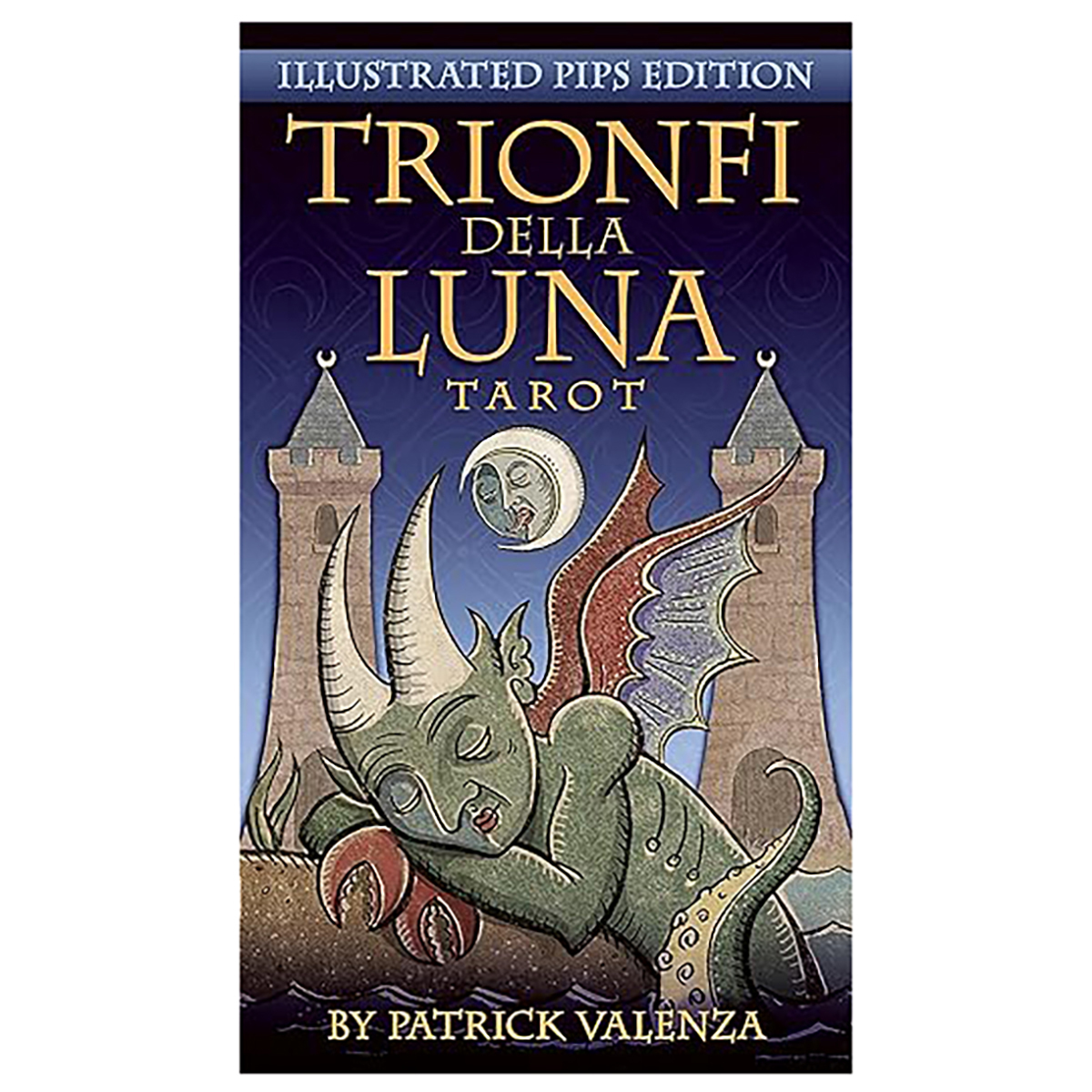
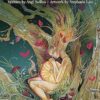
Trionfi della Luna Tarot by Patrick Valenza
$24.14
Moon-Faced Tarot by Valenza
A 78-card tarot of playful pictorial scenes and eccentric moon-faced characters, hand painted in ink, watercolour and gouache, for readers who want a deck with a dreamlike lunar mood.
Quick Uses
- Moon reading: Draw on the full and new moon to read the lunar cycle ahead.
- Dream key: Lay a card under your pillow and read it again on waking.
- Daily draw: Pull one card a day and note its scene.
- Lunar altar: Set the Moon card on your altar for lunar work.
How to Use It
Witchcraft & Folk Magick
- Read on the night of the full moon with a bowl of water to catch the moonlight.
- Use the Moon card as the image of a moon-water charm or dream sachet.
Ceremonial & Occult Magick
- Work with the deck in the hour of the Moon on a Monday for lunar questions.
- Use the cards as scrying images, letting the painted scenes open into vision.
Demonology & Black Magick
- Read under a dark moon before necromantic work or spirit calling to check the timing.
- Ask a spirit to answer through the cards and read the faces as its expression.
- Lay the Moon card as the focal image of a working of glamour or confusion.
A Simple Working
- On the full moon, fill a bowl with water and set it where moonlight can reach it.
- Light a white candle and a little jasmine incense.
- Shuffle while looking at the moon or its reflection.
- Draw three cards: what grows, what is full, what wanes.
- Read the moon-faces as well as the scenes.
- Leave the cards by the bowl overnight.
- Use the water in your next lunar working.
Pairs Well With
- Moonstone, to keep with the deck between readings.
- Jasmine incense, for full-moon readings.
- A silver or white candle, for lunar work.
- Mugwort, for dream readings.
What You Receive
78 tarot cards and a 68-page booklet. Art painted freehand in ink, watercolour and gouache.
Origin & Lore
The earliest name for tarot in 15th-century Italy was carte da trionfi, cards of the triumphs, and this deck takes its name from that old word. It was made as a distant cousin to Valenza’s Deviant Moon Tarot.
The Moon trump has carried associations with illusion, dreams and the unseen since the early Italian decks, and here the whole deck takes its character from it.
Did You Know?
The word “tarocchi” only appears in Italy around 1500; before that the cards were called trionfi, a name usually linked to the triumphal processions of Petrarch’s poem I Trionfi.
| Weight | 0.7 lbs |
|---|
Related products


Altar Supplies