


Triple Moon candle
$26.35
A double-wick candle for moon rites · Available in 3 sizes
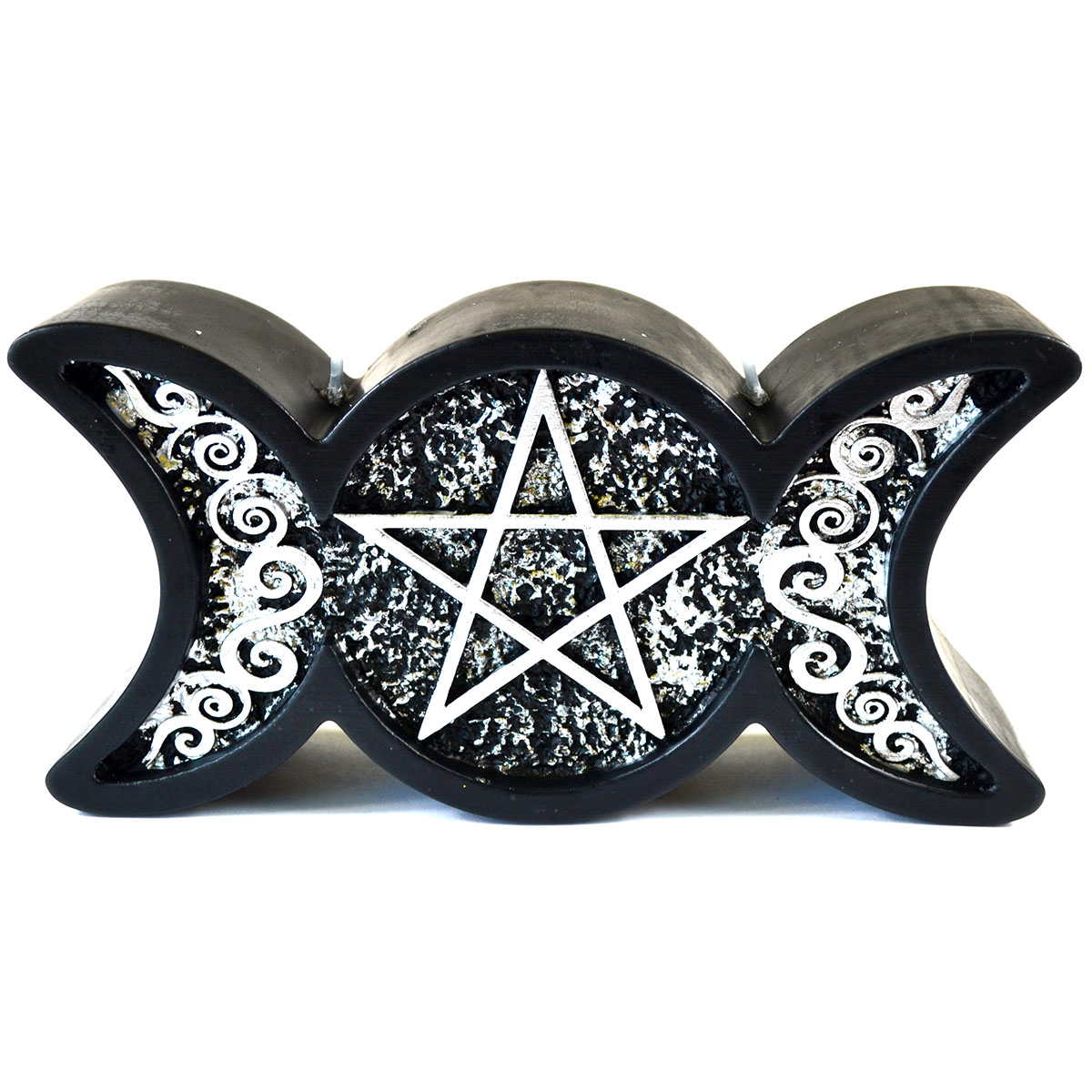
A large double-wick Triple Moon candle lit for moon rites, the Triple Goddess and divination.
Quick Uses
- Esbats: light both wicks at the full moon to open a moon rite and snuff them together to close.
- Moon phases: light it on the waxing moon for drawing work and the waning moon for releasing.
- Divination: burn it while scrying, reading tarot or casting runes at night.
- Dreams: burn the blue or purple candle on a Monday to support dream work and lunar talismans.
How to Use It
Witchcraft & Folk Magick
- Esbats: light both wicks at the full moon to open a moon rite and close by snuffing them together.
- Phase work: light it during the waxing moon for drawing work and the waning moon for releasing.
- Divination: burn it while scrying, reading tarot or casting runes at night.
Ceremonial & Occult Magick
- Lunar operations: burn the blue or purple candle on a Monday, the Moon’s day, to support dream work and lunar talismans.
A Simple Working
- At the full moon, set the candle by a window where the moon can be seen.
- Place a bowl of water in front of it.
- Light both wicks and greet the moon in her three phases.
- Shuffle a tarot deck and draw three cards: past, present and future.
- Read them by the candlelight and note what you see.
- Snuff both wicks and leave the water out overnight as moon water.
Pairs Well With
- A tarot deck: for full moon readings.
- Moon water: made under the full moon beside the candle.
- Mugwort: for dreams and seeing.
- A moonstone: a stone of the moon to keep on the altar.
What You Receive
A large double-wick Triple Moon candle, about 7.75″ long x 3.5″ high, in black, blue or purple with an ornate silver-coloured design. Burn time is approximately 10 to 20 hours.
Origin & Lore
The triple moon is a modern pagan symbol showing the moon’s three visible phases, and in Wicca it is the sign of the Triple Goddess as maiden, mother and crone. It is used on altars for esbats, the moon rites of the witch’s calendar. Black suits dark moon and crone work, blue the full moon and the sea, purple spiritual power and psychic work.
Waxing, full and waning, the three moons stand side by side, and with a wick at each crescent this candle burns from both horns of the moon at once.
The idea of a Triple Goddess of maiden, mother and crone was popularised by Robert Graves in The White Goddess (1948) and adopted by Wicca. The ancient world did know three-formed goddesses, most famously Hecate, who was shown with three bodies at crossroads, and Selene, Artemis and Hecate were sometimes linked as three faces of the moon.
Did You Know?
Hecate’s triple statues, called hekataia, stood at crossroads and house doors in ancient Athens, where offerings known as Hecate’s suppers were left for her at the new moon.
| Weight | N/A |
|---|---|
| Option | Black, Blue, Purple |
Related products


