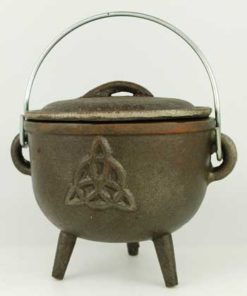



Triple Moon cast iron cauldron
Price range: $23.05 through $35.15
A cauldron for the moon altar · Available in 5 sizes
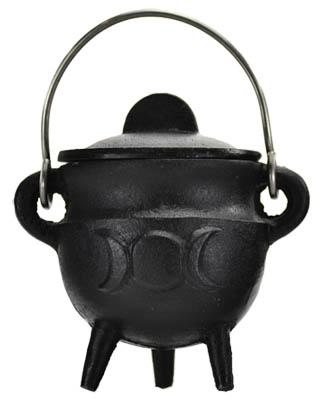
A cast iron cauldron or kettle marked with the Triple Moon, used for lunar rites, scrying and burning incense and herbs at the moon altar.
Quick Uses
- Moon incense: burn mugwort, jasmine or a lunar incense on charcoal inside during esbats.
- Scrying: fill it with water on a full moon night and gaze at the reflected moonlight.
- Libations: fill the kettle with moon water and pour libations onto the earth at the end of a rite.
How to Use It
Witchcraft & Folk Magick
- Moon incense: burn mugwort, jasmine or a lunar incense on charcoal in the cauldron during esbats and full moon circles.
- Scrying: fill the cauldron with water on a full moon night and gaze at the reflected moonlight on its dark surface.
- Kettle libations: fill the kettle with moon water or a cooled herbal infusion and pour libations from it onto the earth at the end of a rite.
A Simple Working
- On a full moon night, set the cauldron where it can catch the moonlight.
- Fill it with water and add a pinch of sea salt.
- Light a white candle beside it.
- Gaze into the water, letting your eyes soften, for several minutes.
- Write down anything you see or sense.
- Pour the water onto the earth and thank the moon.
Pairs Well With
- Mugwort: the classic herb of moon work and dreams.
- White candle: to light the scrying.
- Charcoal discs: for burning loose incense in the cauldron.
- Moonstone: to set beside it on the altar.
What You Receive
Black cast iron Triple Moon cauldron, available in 2 3/4″ with lid and handle, a 2 3/4″ kettle with lid (about 4″ x 2 3/4″ x 2 3/4″), 3″ with lid, 4 1/2″ with lid, and 5″ with lid. Sizes and finish vary slightly as cast iron pieces.
Origin & Lore
This is a small cast iron cauldron (or, in one size, a lidded kettle) cast with the Triple Moon symbol. The cauldron is a hearth pot adopted by the craft for burning and brewing, and the Triple Moon is a modern pagan symbol of the moon’s phases, often linked with the maiden, mother and crone. Together they make a vessel kept for lunar rites and divination.
Waxing crescent, full disc, waning crescent: the Triple Moon shows the whole lunar month in one glance. Cast on an iron cauldron, it marks a vessel for moon work.
The idea of a single goddess in three aspects, maiden, mother and crone, was popularised by Robert Graves in The White Goddess (1948) and taken up by modern Wicca and goddess spirituality. The Triple Moon symbol grew out of that twentieth-century current. The ancient world had its own triple goddess in Hekate, often pictured with three bodies.
Did You Know?
Pausanias records that the sculptor Alkamenes made the first statue of Hekate with three bodies joined together, set up beside the temple of Athena Nike on the Athenian Acropolis.
| Weight | N/A |
|---|---|
| Option | 2 3/4" with lid, 2 3/4" kettle, 3" with lid, 4 1/2" with lid, 5" with lid |
Related products