



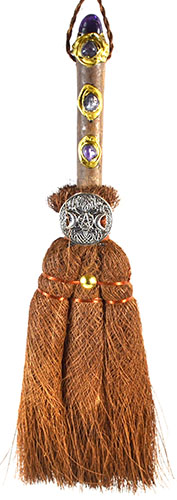
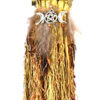
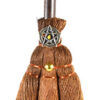
Triple Moon Tree of Life Crystal Altar Broom (12″)
$26.35
A Goddess Broom for the Altar
A 12″ coco palm altar broom set with mixed gemstones, a Triple Moon Tree of Life charm and an amethyst point, kept by witches who want their sweeping tool to honour the Lady as well as clear the space.
Quick Uses
- Circle Sweep: Sweep deosil around your working area before you cast to clear the ground.
- Altar Guardian: Stand it at the back of your altar as a sign of the Maiden, Mother and Crone.
- Moon Rite Tool: Brush it lightly over your tarot deck or scrying bowl at the full moon to refresh them.
How to Use It
Witchcraft & Folk Magick
- Sweep the floor of your ritual space from the centre outward before casting, then hang the broom by the door.
- Lay it across the altar at each moon phase and name which face of the Goddess you are working with that night.
Hoodoo & Rootwork
- Sweep dust from the back of the house toward the front door and out, then leave the broom bristles up behind the door.
- Brush it over the threshold after an unwanted visitor leaves to clear their tracks.
Ceremonial & Occult Magick
- Use it to clear the floor of a temple before drawing the circle, moving with the sun.
- Rest the amethyst end toward the east during lunar rites as a mark of the waxing, full and waning moon.
Demonology & Black Magick
- Sweep the space thoroughly after an evocation to clear any residue the spirit left behind.
- Lay the broom across the edge of your circle as a line no unbidden presence may cross.
A Simple Working
- On the night of the full moon, light a white chime candle on your altar.
- Sprinkle a light ring of sea salt around the candle.
- Hold the broom upright and call on the Maiden, the Mother and the Crone by turn.
- Sweep the air above the salt three times, one stroke for each face of the moon.
- Sweep the floor of the room toward the door, saying what you are clearing out.
- Let the candle burn down and sweep the salt out of the front door in the morning.
Pairs Well With
- White Chime Candles: Simple lights for moon rites and cleansing.
- Sea Salt: For drawing a protective ring and sweeping out after.
- Amethyst Tumbled Stones: To echo the stone on the broom and sit on the altar with it.
- Florida Water: Mist the bristles before a sweep for an extra cleansing.
What You Receive
One 12″ altar broom made from coco palm fibres and membrane, decorated with multi-crystal gemstones and a Triple Moon Tree of Life symbol, and topped with a piece of amethyst.
Origin & Lore
The broom or besom was first a household tool, and from that its magickal purpose grew: to sweep a space clean of dirt and of anything unseen. Old European belief made the broom a witch’s companion, and the first known image of women riding brooms appears in the margins of Martin Le Franc’s poem Le Champion des Dames, written in 1451.
The triple moon of waxing crescent, full disc and waning crescent is a modern Pagan emblem of the Maiden, Mother and Crone, an idea popularised by Robert Graves in The White Goddess (1948). The name amethyst comes from the Greek amethystos, meaning “not intoxicated”, for the stone was once believed to keep the wearer clear headed.
Did You Know?
The earliest known picture of witches riding brooms is a pair of marginal drawings in a French manuscript from 1451.
Related products


