


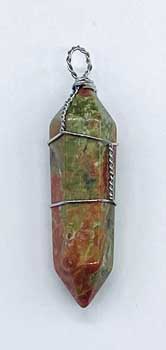

Unakite Wire-Wrapped Point Pendants (Set of 5)
$20.85
Pink and Green Balance
Five wire-wrapped unakite points, the mottled pink and green stone practitioners turn to for balance, self-worth and settling conflict.
Quick Uses
- Heart Pendant: Wear a point near the heart when you are working through an old grievance.
- Peace Keeper: Set one in the room where arguments tend to start.
- Present Moment: Hold a point and breathe when your mind runs ahead to the future.
- Self-Worth: Keep one on your mirror and touch it as you speak a kind word to yourself.
How to Use It
Witchcraft & Folk Magick
- Place a point under your pillow during a waning moon to loosen old emotional knots.
- Wear one during a fertility or growth spell timed to the waxing moon.
- Carry a point in your pocket through a family gathering where old tensions run high.
Hoodoo & Rootwork
- Add a point to a reconciliation packet with a photo of the two people and a pinch of sugar.
- Dress a point with peace water and keep it on the family table.
Ceremonial & Occult Magick
- Use the pink and green of the stone as a focus in Venus workings for harmony.
- Set a point on the heart centre during meditation on balance.
Demonology & Black Magick
- Offer a point at the close of spirit work to mend any frayed feeling between you and an ally spirit.
- Keep one on the altar while you ask a spirit to bring estranged people back to talking terms.
A Simple Working
- On a Friday, light a pink candle beside a bowl of water.
- Drop one unakite point into the water.
- Name a conflict you want to soften, within yourself or with another.
- Hold the other points in your hands while the candle burns for a while.
- Speak what you are ready to let go of.
- Pour the water onto a houseplant or the earth, then wear the point from the bowl for seven days.
Pairs Well With
- Rose Quartz: Adds a tender love current to unakite’s balance.
- Green Aventurine: Another green heart stone for growth and fresh starts.
- Pink Chime Candles: Small candles suited to short reconciliation workings.
- Cord or Chain: The points come bare, ready to string.
What You Receive
A set of five unakite points, each wrapped in wire with a hanging loop. Each point is approximately 1 3/8″ long, and sizes vary as natural stones do. Chain and cord are not included.
Origin & Lore
Unakite is a modern stone in crystal practice, used for balance, self-worth, letting go of emotional blocks and staying in the present. Its blend of pink and green has made it a natural choice for heart, peace and reconciliation work.
Did You Know?
Unakite is named after the Unaka Mountains on the North Carolina and Tennessee border, where it was first described.
Related products


