


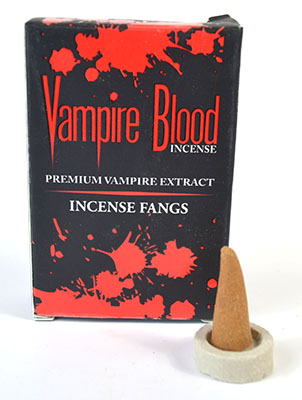
Vampire Blood incense
Price range: $2.48 through $3.25
A dark smoke for glamour and night · Available in 2 sizes
A dark, heady incense named for the vampire of folklore, burned for seduction, glamour, night work and turning back people who drain others.
Quick Uses
- Glamour: pass your clothes and hair through the smoke while dressing for an evening out.
- Seduction: light a stick beside a red candle carved with your name and theirs and let both burn down.
- Night rites: burn it at midnight or during the dark moon to set a heavy, nocturnal mood.
- Draining: burn a cone over a draining person’s name-paper and state that what they take goes back to them.
How to Use It
Witchcraft & Folk Magick
- Glamour: burn a cone while dressing for an evening out and pass your clothes and hair through the smoke so you carry its pull with you.
- Seduction: light a stick beside a red candle carved with your name and the name of the person you want, and let both burn down together.
- Night rites: use it at midnight or during the dark moon to set a heavier, nocturnal mood for ritual.
Demonology & Black Magick
- Returning the drain: for a person who feeds on your time and strength, burn a cone over their name-paper and state that what they take now goes back to them.
- Draining work: practitioners who work against an enemy burn it with a black candle over a photograph, asking that the target’s vigour be drawn off.
A Simple Working
- On a Friday night, set a red chime candle in a holder in front of a mirror.
- Rub a little rose oil on your wrists and throat.
- Light the candle, then light a Vampire Blood cone from it and set the cone in a dish.
- Look at yourself in the mirror through the smoke and name the impression you want to leave.
- Let the candle and cone burn out.
- Keep the cooled ash in a small envelope and carry it on the night you go out.
Pairs Well With
- Red chime candle: for passion and attraction.
- Black chime candle: for returning or draining work.
- Rose oil: to dress the skin in glamour spells.
- Cone incense burner: to catch the falling ash.
What You Receive
Vampire Blood incense, available as a box of 10 cones or a 15 g box of sticks (approximately 15 sticks).
Origin & Lore
Vampire Blood is a modern blended incense, not an old recipe, named for the blood-drinking revenant of Eastern European folklore. Its scent leans dark and rich, and in contemporary witchcraft it is burned for allure, nighttime ritual and work that deals with energy being taken or given.
In 1732 Austrian army doctors dug up the dead of a Serbian village and wrote up what they found: bodies that looked fresh, with blood at the mouth. Their report spread across Europe and gave the vampire its modern shape.
The 1732 report, known as Visum et Repertum and signed by the regimental surgeon Johann Flückinger, described exhumations at Medveđa in Serbia after deaths blamed on the soldier Arnold Paole, said to have become a vampire. Newspapers across German-speaking Europe reprinted it, and scholars argued for decades over what the bodies showed. That debate turned a local folk belief into a European sensation.
Did You Know?
John Polidori’s “The Vampyre” (1819), the first vampire story in English prose fiction, was born at the same 1816 Villa Diodati gathering where Mary Shelley began Frankenstein.
| Weight | N/A |
|---|---|
| Option | 10 cones, 15 g sticks |
Related products


