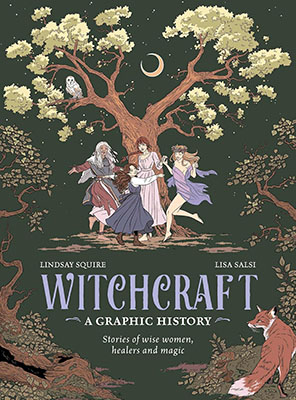

Witchcraft, Graphic History by Squire & Salsi (Hardcover)
$21.99
Illustrated Roots Of The Craft
A graphic-novel history of witchcraft told through Irish wise woman Biddy Early, for witches who want the story of the craft in pictures.
Quick Uses
- Read Aloud: Share it with a newer witch as a first look at the craft’s history.
- Plant Study: Note the plant lore it touches on and look each herb up in your herbal.
- Ancestor Night: Read it on Samhain and honour the wise women who came before you.
How to Use It
Witchcraft & Folk Magick
- Read it alongside your herb work and start a page in your book of shadows for each plant it mentions.
- Use its themes of stigma and self-empowerment as prompts for journalling after ritual.
Ceremonial & Occult Magick
- Read it as a starting point, then follow up on the history with fuller written sources.
- Keep it on your study shelf as a quick visual overview when teaching others.
Demonology & Black Magick
- Light a candle for the wise women and cunning folk persecuted as witches and leave an offering for them.
- Call on the spirit of a historical cunning woman for guidance in folk-craft, with respect and a gift of milk or whiskey.
A Simple Working
- On a Samhain night, light a black chime candle.
- Set a glass of milk beside it as an offering.
- Read the book through.
- Speak aloud the names of any wise women, cunning folk or witches you know from your own line or land.
- Let the candle burn down.
- Pour the milk out at the root of a tree.
Pairs Well With
- Black Chime Candles: For ancestor and remembrance work.
- Herbal Reference Book: To follow up on the plant wisdom.
- Mugwort: An old wise-woman herb for dreams and sight.
- Blank Journal: For notes and reflections.
What You Receive
One copy of Witchcraft, Graphic History by Squire & Salsi, a hardcover with 128 pages.
Origin & Lore
An illustrated history of witchcraft in graphic form. The Irish wise woman Biddy Early acts as guide through the craft’s spiritual and plant-lore roots, green craft and plant wisdom, folklore, feminism, power structures and the stigma witches have faced.
Biddy Early lived in County Clare in the nineteenth century and was famous as a bean feasa, a wise woman, said to gain her knowledge from the fairies. People travelled to her for help with sick animals and family troubles, and the local clergy opposed her. Folklore collector Lady Gregory gathered many stories about her from people who remembered her.
Did You Know?
Biddy Early’s famous blue bottle, through which she was said to see, was by local legend thrown into Kilbarron Lake after her death in 1874.
Related products