


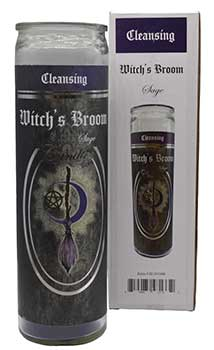

Witch’s Broom 90-hour jar candle (sage)
$16.45
A sage flame for sweeping out
A sage-scented 90-hour jar candle with witch’s broom artwork, burned to sweep negativity and unwanted spirits out of the home.
Quick Uses
- Ritual sweep: light it, then sweep the ritual space sunwise from the centre outward and out of the door.
- House clearing: burn it in the main room after a move or a difficult visitor.
- Doorway: hang a small besom inside the front door and burn the candle beneath it on the first night.
- Sweeping out: sweep from the back of the house to the front step and away while the candle burns.
How to Use It
Witchcraft & Folk Magick
- Ritual sweep: light the candle, then sweep the floor of the ritual space in a sunwise circle, from the centre outward and out of the door.
- House clearing: burn it in the main room after a move, an illness in the house or a difficult visitor.
- Broom at the door: hang a small besom over the inside of the front door and burn the candle beneath it on the first night.
Hoodoo & Rootwork
- Sweeping out: sweep from the back of the house to the front door, then sweep the dirt off the step and away, while the candle burns in the house.
- Never sweep after dark toward the door, an old Southern belief, unless the work is meant to send something or someone out.
A Simple Working
- Open a window in each room you mean to clear.
- Light the candle in the centre of the house.
- With a broom, sweep each room from its far corner toward the door, saying “Out with what does not belong here.”
- Gather all the sweepings at the front door and sweep them over the threshold.
- Sprinkle a pinch of sea salt across the inside of the doorway.
- Close the windows and let the candle burn for an hour before snuffing.
Pairs Well With
- A besom broom: for the ritual sweep itself.
- Sage: loose or in a bundle, to smoke the rooms afterwards.
- Sea salt: to seal the threshold once the sweeping is done.
- Florida Water: to wipe door handles and windowsills.
What You Receive
One sage-scented jar candle with Witch’s Broom artwork, approximately 90 hours of burn time, supplied boxed.
Origin & Lore
The besom or broom is a working tool before it is a magickal one: a bundle of twigs bound to a handle for sweeping hearth and yard. In folk custom and modern Wicca it sweeps a ritual space clear before the circle is cast, and a broom kept by the door is said to guard the house. Sage, the scent here, has a long reputation as a cleansing, clarifying herb.
In 1324 Dame Alice Kyteler of Kilkenny was accused, among much else, of sweeping the dust of the streets toward her son’s door so that the town’s wealth would follow it.
The marginal illustration in Martin Le Franc’s poem Le Champion des Dames (1451) shows two women riding through the air, one on a broom and one on a stick, and is often cited as the earliest picture of witches on brooms. The medieval Salerno health verses ask, “Why should a man die while sage grows in his garden?”, and Culpeper placed sage under Jupiter.
Did You Know?
“Jumping the broom” as a wedding custom is recorded among enslaved African Americans, who were barred from legal marriage, and in Romani and rural British tradition.
| Weight | 1.8 lbs |
|---|
Related products


