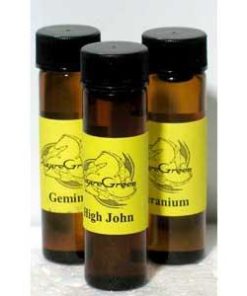

Wizard oil
Price range: $3.25 through $80.25
An oil for study and magickal authority · Available in 3 sizes
An oil named for the wizard, worked for study, magickal authority and success in ritual.
Quick Uses
- Tools: anoint the wand, staff or ring before a ceremonial working.
- Study: touch a drop to the brow before studying a grimoire or a difficult text.
- Exams: dress a purple candle for success in exams or any work of learning.
- Grimoire: anoint the cover of a magickal journal or book of shadows.
How to Use It
Ceremonial & Occult Magick
- Anoint the wand, staff or ring before a ceremonial working.
- Dress the candles of the circle before a ritual of high magick.
- Touch a drop to the brow before studying a grimoire or a difficult text.
Witchcraft & Folk Magick
- Dress a purple candle for success in exams or any work of learning.
- Anoint the cover of a magickal journal or book of shadows.
A Simple Working
- Lay out your wand or a pen you use for magickal writing.
- Anoint it with the oil from base to tip.
- Dress a purple chime candle with the oil and light it.
- Hold the wand or pen in the flame light and say what you mean to learn or achieve.
- Use the pen to write your goal on a piece of parchment.
- Let the candle burn out and keep the parchment with your magickal books.
Pairs Well With
- A purple chime candle: for wisdom and magickal authority.
- Parchment paper: for writing seals and goals.
- Frankincense: the classic incense of ceremonial rites.
- Solomon’s Seal oil: for wisdom work alongside it.
What You Receive
Wizard oil, available in 2 dram, 1 oz and 16 oz.
Origin & Lore
Wizard oil is a modern formula named for the learned magician of folklore and legend, from Merlin to the village cunning man. It is used to dress candles and tools in ritual, study and divination, and to call on the authority of the magician’s art.
“Wizard” began as a word for a wise man: it was built in the fifteenth century from Middle English wys, wise, with the ending -ard.
In England, the cunning folk were local practitioners who found stolen goods, broke curses and told fortunes, and they were also called wise men and wizards. Merlin, the wizard of Arthurian legend, first appears in the writings of Geoffrey of Monmouth in the twelfth century.
Did You Know?
The Witchcraft Act of 1735 made pretending to witchcraft a crime in Britain, and it was used against the medium Helen Duncan as late as 1944.
| Weight | N/A |
|---|---|
| Size | 2 dram, 1 oz, 16 oz |
Related products