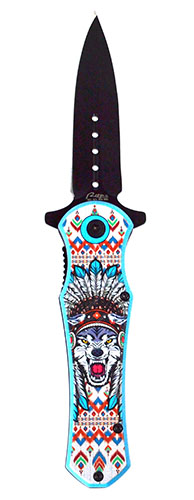
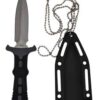
Wolf Athame (4 3/4″)
$15.35
The wolf as guardian on your ritual blade
A folding athame with a Southwestern-style wolf and tribal design on the handle, for the practitioner who works with the wolf as ally.
Quick uses
- Circle: cast and close the circle with the opened blade.
- Spirit work: call on the wolf as a guardian before journeying.
- Courage: hold the closed blade when you need to stand your ground.
How to Use It
Witchcraft & Folk Magick
- The athame’s traditional purpose is to direct energy: casting the circle, calling the quarters and charging oils, candles and charms by pointing.
- A wolf handle brings the qualities of the pack animal into the tool: loyalty, guardianship and the hunter’s focus, which suits protection and courage workings.
- Fold and carry it as a personal ward, opening it only in the circle.
Divination & Spirit Work
- Practitioners who work with animal spirits use the wolf athame to open sessions of spirit journeying, pointing it to the four quarters and asking the wolf to walk ahead.
- Lay it across the threshold of the ritual space as a guardian while you scry or work with the dead.
Demonology & Black Magick
- In darker work the wolf is the predator and the outsider; the blade can be used to cut cords, to sever a link to an enemy or to mark the edges of a hex.
- Point it at a spirit’s sigil during a conjuration as a sign of command.
A Simple Working
- Smoke the blade with cedar or sage.
- Open it and point it to the north, east, south and west, calling the wolf at each quarter.
- Trace your circle clockwise.
- State the protection or courage you are asking for.
- Close the circle, fold the blade and keep it on your altar.
Pairs Well With
- Black Candles: for protection workings with the wolf.
- Cedar Incense: a traditional cleansing smoke for the blade.
- Obsidian: to sit with the athame as a protective stone.
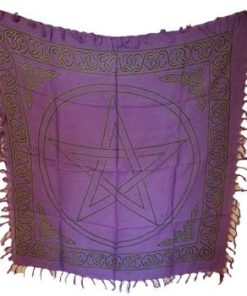
- Altar Cloth: to wrap the blade when not in use.
What You Receive
One switchblade-style athame, 4 3/4″, with a Southwestern-style wolf design and tribal symbols on the handle.
Origin & Lore
The wolf is a powerful figure across many cultures: the guardian and teacher in many Indigenous American stories, Fenrir and the wolves of Odin in Norse myth, and the she-wolf who nursed the founders of Rome.
Witches and pagans have long associated the wolf with the moon, the wild, and the loyalty of the pack.
Did You Know?
The Roman festival of Lupercalia, held on 15 February, took its name from lupus, the Latin word for wolf.
Related products