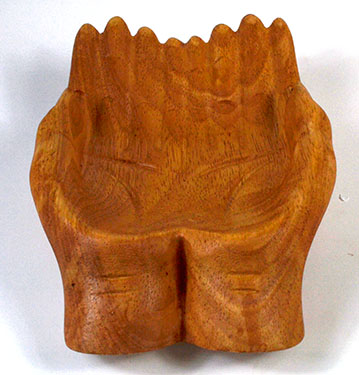
Wooden Hand Offering Bowl (7″)
$36.25
An open hand to hold what you give the spirits
A 7″ carved wooden bowl in the shape of an open hand, made to hold offerings on the altar.
Quick uses
- Offerings: place bread, fruit, coins or flowers for your spirits.
- Ancestors: keep it on the ancestor shelf as the giving hand.
- Altar: hold stones, keys or charms between workings.
How to Use It
Witchcraft & Folk Magick
- An offering bowl exists to give: it holds food, drink, flowers, coins or incense laid out for deities and spirits, and the open hand shape makes that gesture visible.
- Fill it on the new moon with coins and a bay leaf as a standing money offering, renewing it each month.
- Use it to hold the charms of a spell while they are being charged.
Divination & Spirit Work
- On an ancestor altar the hand is a reminder of the hands that came before; set favourite foods of the dead in it and speak their names.
- Leave the first portion of a meal in the bowl as a household offering, removing it before it spoils.
Demonology & Black Magick
- Practitioners who work with spirits under pact use a dedicated bowl for the agreed offering, such as wine, blood, tobacco or coins, so the giving is clear and kept apart from household use.
- Place a spirit’s sigil beneath the bowl so the offering is directed to that spirit alone.
A Simple Working
- Cleanse the bowl with incense smoke.
- Set it on your altar with a white candle beside it.
- Place your offering in the open palm.
- Speak to the spirit you are giving to and say what the offering is for.
- Remove and dispose of the offering respectfully after a day or two.
Pairs Well With
- White Candles: a simple light to accompany the offering.
- Florida Water: to cleanse the altar around the bowl.
- Ancestor Incense: for spirit and ancestor work.
- Coins: a traditional offering in money workings.
- Altar Cloth: to dress the space beneath the bowl.
What You Receive
One wooden offering bowl in the shape of a hand, 7″, with carved detail and a smooth finish.
Origin & Lore
Offering vessels are among the oldest religious objects: bowls of food and drink for gods and the dead appear in tombs, temples and household shrines across the ancient world.
The open hand is itself a sacred sign, from the blessing hand of Christian icons to the hamsa of the Middle East and North Africa.
Did You Know?
The hand-shaped hamsa amulet is called the Hand of Fatima in Islamic tradition and the Hand of Miriam in Jewish tradition.
Related products