

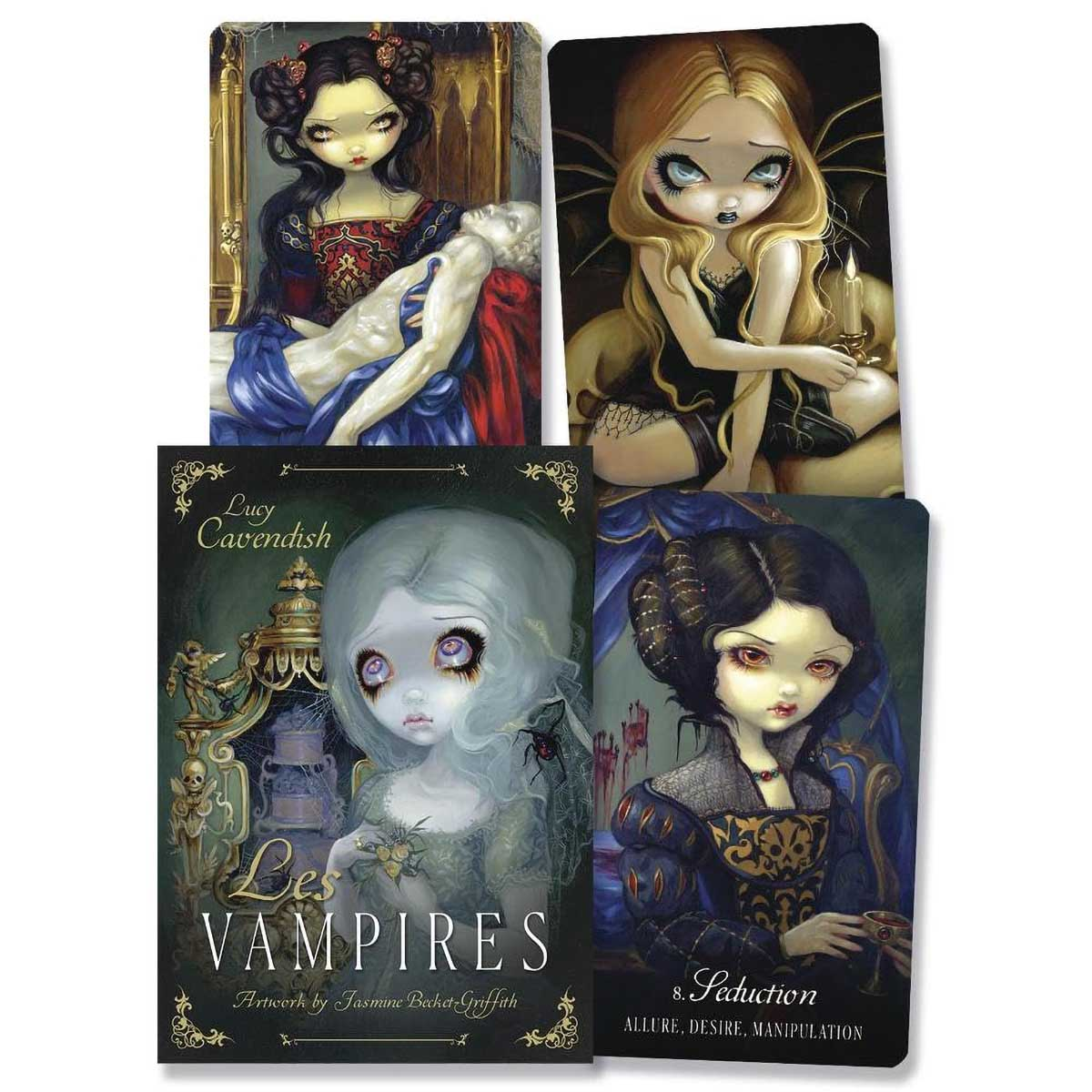

Les Vampires Oracle by Lucy Cavendish
$31.85
Vampire Oracle For Dark Nights
A 44-card oracle of vampiric allies for upheaval, draining relationships and the dark night of the soul, used by readers who want protection and blunt counsel.
Quick Uses
- Energy Drain Check: Ask which person or situation is draining you and read the card plainly.
- Cutting Ties: Draw for guidance before a separation or a cord-cutting spell.
- Protection: Lay a protective card on your altar during warding work.
- Decision Reading: Use a three-card spread when facing a hard choice.
How to Use It
Witchcraft & Folk Magick
- Read before a cord-cutting spell to name exactly what must be severed.
- Set a protective card under a black candle in a ward against energy vampires.
Hoodoo & Rootwork
- Use a drawn card in a break-up working between two figure candles, then separate them.
- Lay a card in a protection packet with salt and black pepper by the door.
Demonology & Black Magick
- Read before and after a working with a spirit of the night, asking how it is disposed toward you.
- Ask a vampiric or predatory spirit to answer through one card, and record the terms it gives.
- Use a card as the image of a draining person at the heart of a reversal or return-to-sender spell.
A Simple Working
- On a Saturday night, light a black chime candle and burn a pinch of dragon’s blood resin.
- Write the name of the draining person or situation on a slip of paper.
- Shuffle and draw one card for how they drain you and one for how to stop it.
- Lay the paper under the first card and the second card on top.
- Read both, then cut the paper in two with scissors while stating that the tie is ended.
- Burn one half in the candle flame and bury the other away from your home.
Pairs Well With
- Dragon’s blood resin: a strong protective and empowering smoke.
- Black chime candles: for cutting ties and warding.
- Black tourmaline: a stone kept against draining influences.
- Uncrossing salt: to cleanse yourself after a hard reading.
What You Receive
One oracle deck of 44 cards with a 136-page book. Card stack is 5 1/2″ x 3 3/4″ x 3/4″.
Origin & Lore
Oracle decks keep no fixed structure; each is shaped around a theme. This one reimagines the vampire, long a figure of fear, as an ally for those going through dark times, with art by Jasmine Becket-Griffith and text by Lucy Cavendish.
Belief in blood-drinking revenants is old in Eastern European folklore, and by the eighteenth century reports of vampire cases in the Habsburg borderlands were being investigated by officials and printed across Europe.
Did You Know?
John Polidori’s story The Vampyre, written in 1816 during the same Villa Diodati gathering that produced Frankenstein and published in 1819, shaped the aristocratic vampire of later fiction.
| Weight | 1.1 lbs |
|---|
Related products

Crystal Balls