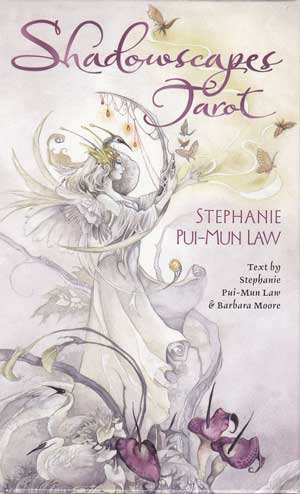
Shadowscapes Tarot by Stephanie Pui-Mun Law & Barbara Moore
$27.49
Fairy-Tale Tarot in Fine Watercolour
A 78-card tarot on the Rider-Waite-Smith pattern, painted by Stephanie Pui-Mun Law in a blend of Asian, Celtic and fantasy styles and full of symbols from fairy tale, myth and folklore.
Quick Uses
- Everyday readings: Read it as any RWS deck, using its familiar structure.
- Dream work: Lay a card beside the bed and note how its image enters your dreams.
- Fae work: Draw a card when making offerings to the fair folk.
- Meditation: Sit with one card’s scene and let it unfold in the mind’s eye.
How to Use It
Witchcraft & Folk Magick
- Read for folk and fae workings, drawing on the deck’s fairy-tale imagery.
- Lay a card that shows the outcome you want under a candle as the spell’s focus.
Ceremonial & Occult Magick
- Use the detailed painted scenes for pathworking and astral visualisation.
- Read with the standard RWS meanings, which this deck follows closely.
Demonology & Black Magick
- Read before and after an evocation to see how the spirit is disposed and how the work landed.
- Ask a familiar spirit to answer through the cards inside your ritual space.
A Simple Working
- Light a silver or white candle at bedtime.
- Shuffle and draw one card for a question you want to dream on.
- Study the image closely for a few minutes.
- Place it face up on your bedside table beside a sprig of mugwort.
- Ask to be shown the answer in sleep.
- On waking, write down the dream before anything else and compare it to the card.
Pairs Well With
- Mugwort: the classic dream herb.
- A moonstone: a lunar stone for intuitive reading.
- A white chime candle: for gentle reading and dream rites.
- A reading cloth: to show off the deck’s art and protect the cards.
What You Receive
One tarot deck of 78 cards with an instructional booklet.
Origin & Lore
Tarot began in fifteenth-century northern Italy as a card game, the trionfi, played with an added suit of picture trumps. Its use as a tool for reading fate grew in eighteenth-century France and was shaped into the system most readers know by the occult orders of the late nineteenth century.
The Shadowscapes Tarot follows the Rider-Waite-Smith structure, painted by Stephanie Pui-Mun Law in a style that blends Asian, Celtic and fantasy art and draws on fairy tales, myth and folklore from around the world.
Did You Know?
Before the Smith-Waite deck of 1909, almost no tarot gave every pip card a full scene; the main earlier example was the Sola Busca deck of the late fifteenth century.
| Weight | 0.7 lbs |
|---|
Related products

Altar Supplies