



Raven & Skull Leather Journal with Latch
$32.95
A Raven’s Book of the Dead
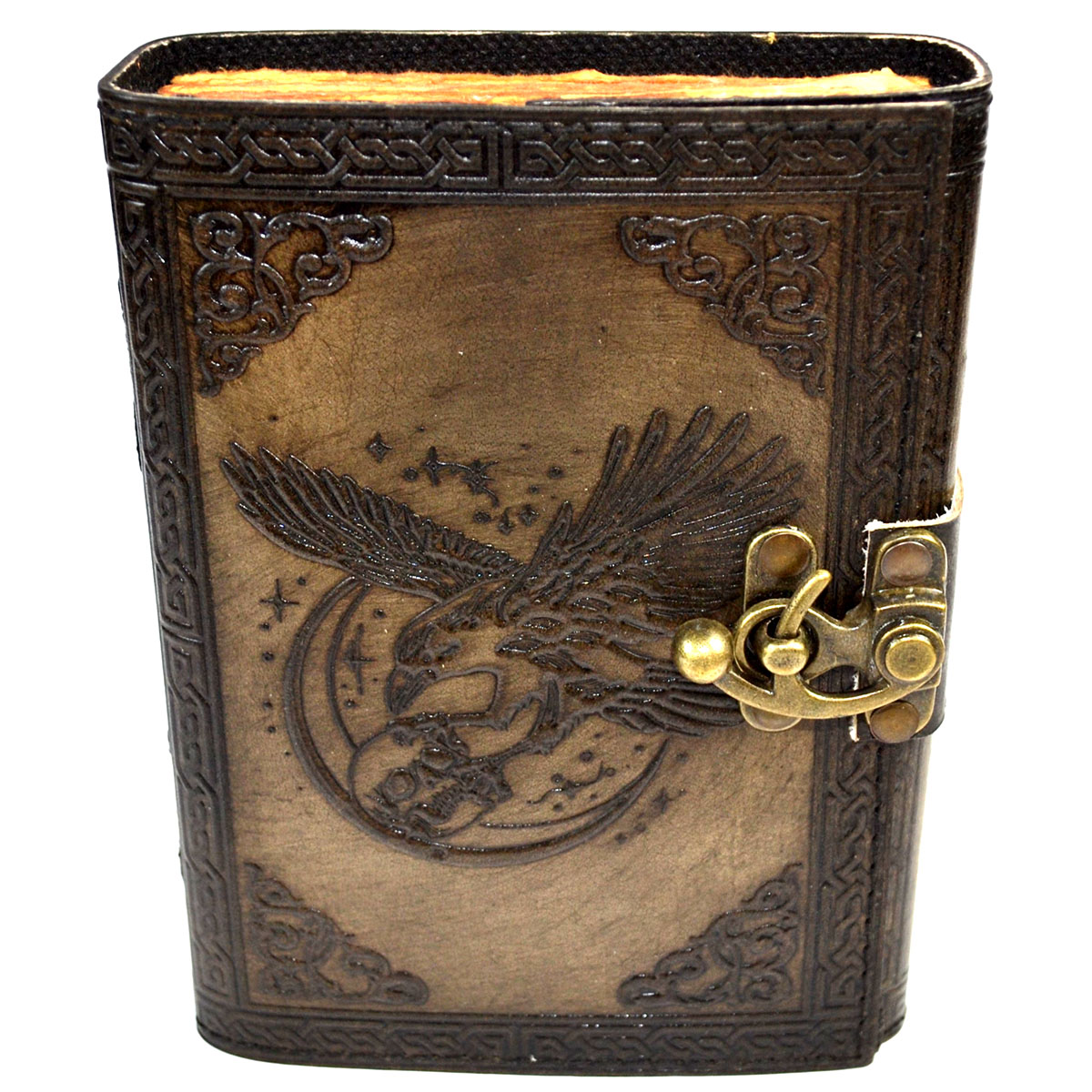
A leather journal showing a raven carrying a skull, kept by practitioners as a necromantic grimoire, ancestor book or evocation log.
Quick Uses
- Ancestor Book: Record the names, dates and stories of your dead alongside the offerings you make them.
- Necromantic Notes: Write the rites you use to contact the dead and what came through.
- Omen Record: Note bird sightings and other omens with date and place.
- Grimoire: Keep your darker workings, seals and correspondences in one private book.
How to Use It
Witchcraft & Folk Magick
- Use it as an ancestor book, writing names and memories and the offerings left on the altar.
- Log raven and crow sightings as omens and see how they line up with events.
Ceremonial & Occult Magick
- Keep a Saturnian working diary, timed to Saturday and the hour of Saturn.
- Write out invocations and the names of the powers you work with in your own hand.
Demonology & Black Magick
- Record each evocation or necromantic session: seal used, offerings of incense, candles and drink, and what was perceived.
- Design and refine sigils and spirit seals on the aged pages.
- Read cards before and after a working and write both spreads in the book.
A Simple Working
- On a Saturday after dark, light a black candle and burn a little myrrh.
- Set an ancestor photograph or a small skull figure beside the journal.
- Pass the closed book through the smoke three times.
- Open to the first page and write that this book is dedicated to your work with the dead.
- Write the names of three of your own dead beneath it, and pour a small glass of drink as an offering.
- Sit a while in silence, then close the latch and let the candle burn down safely.
Pairs Well With
- Myrrh, the traditional resin of the dead.
- A black chime candle, for short Saturday workings.
- A small skull figure or ancestor photograph, as the focus of the altar.
- A black obsidian scrying mirror, for necromantic scrying sessions recorded in the book.
What You Receive
One leather journal with a latch closure. The cover shows a raven in flight clutching a skull in its talons. Filled with aged-looking paper.
Origin & Lore
Records of work with the dead are as old as writing. The Greek Magical Papyri include rites for questioning the dead, and later European grimoires carried instructions for necromantic divination copied by hand from one book to the next.
Ravens have been birds of the dead and of prophecy across the north and west: they feed on the battlefield, attend the Irish war goddess the Morrígan, and serve Odin as his messengers.
Did You Know?
In the Old Norse poem Grímnismál, Odin’s two ravens are named Huginn and Muninn, usually translated as Thought and Memory, and they fly over the world each day to bring him news.
| Weight | 1.3 lbs |
|---|
Related products


All Journals


All Journals