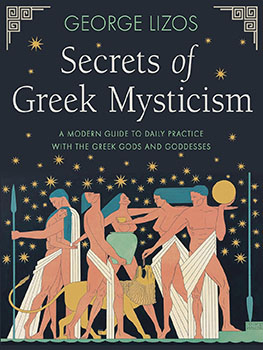
Secrets of Greek Mysticism by George Lizos
$21.95
The Greek Gods, From Within
A Hellenic Polytheist priest’s guide to the Greek gods as living powers, for witches who want devotion with real roots.
Quick Uses
- Daily Devotion: Read one god’s section each morning and speak their hymn aloud before you start your day.
- Virtue Work: Pick the god whose virtue you lack and work their mantra for seven days.
- Altar Building: Use the book to choose offerings and colours for a small shrine to one deity.
How to Use It
Witchcraft & Folk Magick
- Set a bowl of honey and barley on your altar and read the god’s meditation by candlelight.
- Keep a devotion journal and note how each god’s virtue shows up in your week.
Ceremonial & Occult Magick
- Open your rites with a spoken hymn in the old manner, hands raised, voice clear.
- Time workings for Ares, Aphrodite or Demeter to the matching planetary day and hour.
Demonology & Black Magick
- Approach the chthonic side of the pantheon with libations poured onto the earth, never drunk.
- Write a god’s name on parchment and lay it under a black candle when you petition for strength.
A Simple Working
- Choose one god or goddess whose virtue you need.
- Light a white tealight and a stick of frankincense.
- Pour a small libation of wine or water into a dish.
- Read that deity’s section and speak their mantra nine times.
- Sit with the meditation until the candle burns low.
- Pour the libation outside onto bare earth.
Pairs Well With
- Frankincense Resin: The classic offering smoke of Greek temple worship.
- Olive Oil: For anointing candles and statues in Hellenic devotion.
- White Chime Candles: Clean light for daily prayer.
- Libation Bowl: To pour offerings the traditional way.
What You Receive
One copy of Secrets of Greek Mysticism by George Lizos. A 5.75″ x 7.5″ paperback with 256 pages.
Origin & Lore
Written by a native Greek who serves as a priest of Hellenic Polytheism, this book approaches the Olympians as gods to be known, not just characters in old stories. It ties each deity to a virtue you can practise, reads the myths for their spiritual meaning, and gives meditations, mantras, hymns and simple rites to bring that god into daily life.
Ancient Greek religion was a religion of practice. Households kept shrines, cities held festivals, and people poured libations, burned incense and sang hymns to win the favour of their gods. Modern Hellenic Polytheism, sometimes called Hellenismos, revives that practice, and Greece formally recognised it as a religion in 2017.
Did You Know?
The Delphic maxim “Know thyself” (gnothi seauton) was said to be carved in the forecourt of the temple of Apollo at Delphi.
Related products