


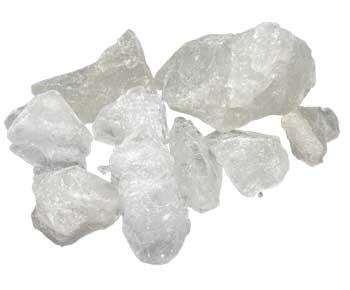


Alum stone
$16.45
The rootworker’s stone for silencing gossip
A clear mineral salt with a puckering touch, used in rootwork to shut gossiping mouths and in folk practice against the evil eye.
Quick Uses
- Silencing: wrap a name-paper around a piece of alum to stop gossip and slander.
- Evil eye: pass a piece around the body, drop it into fire and read the shape it melts into for the source of envy.
- Ward stone: keep a chunk on a windowsill or near the door as a protective piece.
- Sour jars: add crushed alum to sour jars and binding work so the target’s words dry up.
How to Use It
Witchcraft & Folk Magick
- Evil eye removal: in Moroccan and South Asian folk practice a piece of alum is passed around the body and dropped into fire, and the shape it melts into is read for the source of the envy.
- Ward stone: keep a chunk on a windowsill or near the door as a protective piece.
Hoodoo & Rootwork
- Silencing: a name-paper is wrapped around or tucked beside a piece of alum to stop gossip and slander.
- Shutting a mouth: crushed alum goes into sour jars and binding work so the target’s words dry up.
A Simple Working
- Write the gossiper’s full name on a small slip of paper.
- Fold the paper away from you.
- Place it in a small jar and lay a piece of alum on top.
- Add a splash of vinegar to sour their words.
- Close the lid and say: “Your mouth is shut against me.”
- Seal the lid with wax from a black chime candle and keep the jar out of sight.
Pairs Well With
- Slippery elm, used in rootwork to stop gossip.
- Vinegar, the base of souring work.
- A black chime candle, to seal the jar.
- Rue, a long-standing companion against the evil eye.
What You Receive
Alum stone, available in 1 lb.
Origin & Lore
Alum stone is potassium aluminium sulphate, a mineral salt that forms clear, glassy crystals. For centuries it fixed dyes in cloth, prepared leather, cleared cloudy water and served barbers as a rub after shaving.
Touch alum to your tongue and your mouth draws tight. That puckering bite is exactly why rootworkers reach for it when a mouth needs shutting.
Alum has been worked since antiquity; Pliny the Elder described its use in dyeing. Reading melted alum to diagnose and remove the evil eye is still practised in Morocco today.
Did You Know?
After large alum deposits were found at Tolfa near Rome in the 1460s, the papacy ran the alum trade as a monopoly, so valuable was it to the cloth industry.
| Weight | 1.2 lbs |
|---|
Related products


All Herbs

All Herbs