



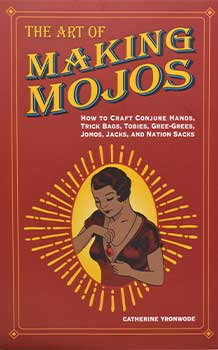

Art of Making Mojos by Catherine Yronwode
$16.45
Build And Feed A Mojo Hand
A paperback guide to making and keeping conjure hands, trick bags and nation sacks in the hoodoo tradition.
Quick Uses
- Bag Builder: Keep it beside you while you choose and load the contents of your first bag.
- Feeding Guide: Check it each week when you feed your mojo.
- Terms Reference: Look up tobies, jomos, jacks and gree-grees as you meet them.
How to Use It
Witchcraft & Folk Magick
- Build a simple luck bag following its approach and record how it changes your week.
- Use it to compare charm-bag customs with European witch bottles and sachets.
Hoodoo & Rootwork
- Assemble a hand, breathe into it and name it, then carry it on your body.
- Feed your mojo with whiskey or condition oil on a regular schedule.
Demonology & Black Magick
- Make a bag for a spirit pact or offering, loaded with items linked to that spirit.
- Build a trick bag for crossing work and keep it apart from your luck bags.
A Simple Working
- Cut a small square of red flannel or use a ready bag.
- Choose an odd number of herbs, roots or curios for your aim.
- Add a piece of High John the Conqueror root.
- Breathe into the bag and tie it closed.
- Dress it with a few drops of condition oil.
- Carry it out of sight and feed it weekly.
Pairs Well With
- Red Flannel Bags: The traditional bag for a hand.
- High John the Conqueror Root: A classic root for power and luck.
- Lodestones: Carried in drawing bags.
- Art of Hoodoo Candle Magic: Another book in the same series.
What You Receive
One copy of Art of Making Mojos by Catherine Yronwode. Paperback, 96 pages.
Origin & Lore
This book gives clear, authentic instructions for making and working with conjure hands, trick bags, tobies, gree-grees, jomos, jacks and nation sacks in hoodoo folk practice.
The mojo bag is one of the signature tools of African American conjure, with roots in West and Central African charm bundles. Much of what is known of the older practice comes from Harry Middleton Hyatt’s interviews with root workers in the 1930s, published in his volumes Hoodoo, Conjuration, Witchcraft, Rootwork.
Did You Know?
Zora Neale Hurston documented hoodoo in New Orleans in her 1931 study Hoodoo in America, published in the Journal of American Folklore.
Related products


