


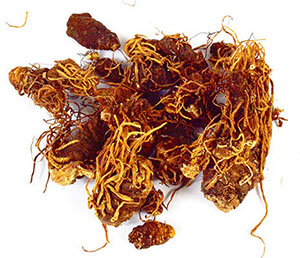
The trillium does everything in threes: three leaves, three petals and three sepals, all rising from a single knotted root.
Origin & Traditional Use
Beth root is the rhizome of Trillium erectum, a spring wildflower of the forests of eastern North America with deep red flowers. The root was traditionally used by Indigenous peoples and later by American herbalists around childbirth, which gave it the name birthroot, worn down over time to beth root.
Uses by Tradition
Witchcraft & Folk Magick
- Love charm: rub a piece of the root over the skin before meeting someone you wish to attract.
- Purse root: keep a piece in a purse or wallet to draw money and luck.
Hoodoo & Rootwork
- Money and luck mojo: a whole root is carried in a mojo bag for money drawing and good fortune.
- Dressed root: the root is anointed with a money or luck oil and fed regularly to keep it working.
A Simple Working
- Light a green chime candle.
- Place a whole beth root on a small square of green flannel.
- Add a pinch of cinnamon and one coin.
- Dress the root with a drop of money oil.
- Tie the bag closed and breathe into it before the final knot.
- Carry it with you and feed it a drop of oil each week.
Pairs Well With
- Cinnamon, for fast money drawing.
- Basil, for business and household money.
- Rose petals, in love charms.
- A green flannel bag, the traditional cloth for money mojo.
Lore & History
The name wake-robin is said to come from the plant blooming just as the robins return in spring. Stinking Benjamin refers to the flowers’ carrion scent, which draws flies as pollinators.
What You Receive
Whole dried beth root, available in 1 oz, 2 oz and 1 lb.
Did You Know?
Trillium seeds carry a small fatty appendage that ants love, so ants carry the seeds away and plant the next generation.
| Weight | N/A |
|---|---|
| Size | 1 oz, 2 oz, 1 lb |
Related products


