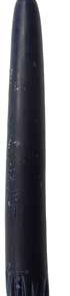

Centering Ritual Candle
$6.55
A Theban inscribed candle for stillness and calm
A ritual candle charged, anointed and inscribed with Theban script to bring calm and stillness to yourself and your surroundings.
Quick uses
- Calm: burn it to bring stillness into your home.
- Before ritual: light it to centre yourself before working.
- Meditation: burn during meditation to anchor focus.
In stock
How to Use It
Candle Magick
- The candle has been charged, anointed and inscribed with Theban script before it reaches you.
- Burn it in sessions of an hour or so, as it burns approximately 1 inch per hour.
Witchcraft & Folk Magick
- Theban, the witches’ alphabet, carries a long association with spell writing and secrecy.
- Light it at the start of your ritual to gather scattered energy back into the centre.
Demonology & Black Magick
- Centring is essential before evocation; a practitioner who is scattered gives spirits too much room.
- Burn this candle before the seal of a spirit and let its calm settle you before you begin the conjuration.
- Return to it after the working to close and bring yourself fully back.
Divination & Spirit Work
- Light it before a reading so your mind is still and your answers clear.
- Sit with it before mediumship or trance work so you can tell your own thoughts apart from what comes through.
Ceremonial & Occult Magick
- Ceremonialists speak of the middle pillar and of returning to the centre of the circle, the still point from which all quarters are commanded.
- Burn the candle at the heart of your altar while performing a centring exercise such as the Middle Pillar.
A Simple Working
- Sit before your altar and place the candle in a sturdy holder.
- Breathe slowly in for four counts and out for four counts.
- Light the candle and gaze at the flame.
- Let thoughts drift past without following them.
- After an hour, snuff the candle and repeat on following days until it is done.
Pairs Well With
- Lavender: for peace and stillness.
- Amethyst: to quiet the mind.
- Candle holder: for safe burning.
- Meditation cushion: to sit comfortably.
- Frankincense: to sanctify the space.
What You Receive
One 7″ Centering Ritual Candle, charged, anointed and inscribed with Theban script; burns approximately 1″ per hour.
Origin & Lore
The Theban alphabet was first published in 1518 by Johannes Trithemius in his Polygraphia, attributed to Honorius of Thebes.
It later appeared in Agrippa’s Three Books of Occult Philosophy and was adopted by modern witches, who call it the witches’ alphabet.
Did You Know?
Honorius of Thebes, to whom the Theban script is attributed, is also the legendary author of the Sworn Book of Honorius, one of the oldest grimoires of the Middle Ages.
| Weight | 0.25 lbs |
|---|
Related products