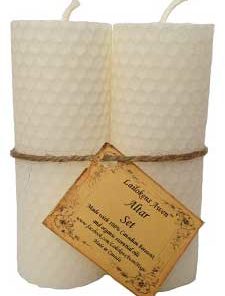
Empowerment Ritual Candle (7″)
$6.55
A charged and inscribed candle for power in all things
A prepared ritual candle that has been charged, anointed and inscribed with Theban script, burned to give a boost to your endeavours.
Quick uses
- Empowerment: burn it before a new venture.
- Confidence: light it when you need strength to face a challenge.
- Spirit work: set it on the altar to add power to your petitions.
In stock
How to Use It
Candle Magick
- The Empowerment Ritual Candle is already charged, anointed and inscribed with Theban script, so it is ready to burn as soon as your intention is set.
- At around one inch per hour, the 7″ candle can be burned in a single long session or in several shorter ones across consecutive nights.
Witchcraft & Folk Magick
- Witches set the candle among stones and herbs of power, such as carnelian, pyrite and High John root, to strengthen the working.
- Write a petition naming what you want empowered and set it beneath the candle.
Ceremonial & Occult Magick
- Theban script, known as the witches’ alphabet, has been used since the sixteenth century to write magickal words hidden from ordinary eyes.
- Light the candle in a planetary hour of the Sun or Mars for success and strength.
Demonology & Black Magick
- Practitioners burn the candle on the altar of a spirit of power or authority, asking that its strength be lent to their work.
- Set the candle on the spirit’s sigil and speak its enn as the flame grows, then state your petition.
- Use it as the opening light of a pact working, so that you approach the spirit from a place of strength.
A Simple Working
- Hold the candle and speak plainly what you want empowered.
- Write your petition and lay it under the candle holder.
- Light the candle and focus on the flame while you repeat your petition.
- Burn it for one hour each night until it is spent, snuffing it between sessions.
- Bury or keep the remaining wax as a charm.
Pairs Well With
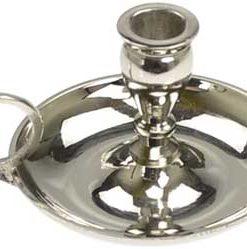
- Candle holder: to burn the candle safely.
- Petition paper: to state your aim.
- High John the Conqueror oil: to add mastery.
- Carnelian: for courage.
- Frankincense: for power and success.
What You Receive
One Empowerment ritual candle, 7″, burns approximately 1″ per hour. Charged, anointed and inscribed with Theban script.
Origin & Lore
Theban script first appears in print in the work of Johannes Trithemius and his student Heinrich Cornelius Agrippa, who attributed it to Honorius of Thebes.
Modern witches adopted it as a secret alphabet for inscribing tools, candles and books of shadows.
Did You Know?
Theban is often called the ‘witches’ alphabet’ and is sometimes known as the Runes of Honorius, though it is not related to the Germanic runes.
| Weight | 0.25 lbs |
|---|
Related products