
Ceramic Rune Set
$16.45
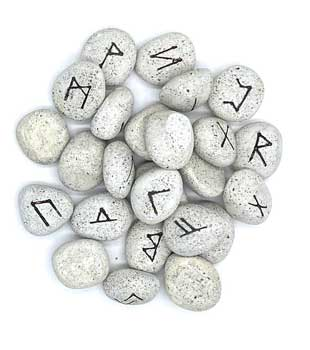
The Full Elder Futhark In Ceramic
A set of ceramic runes carrying the full Elder Futhark, a sturdy everyday set for casting, study and charm-making.
Quick Uses
- Daily Draw: Pull a single rune each morning and log it.
- Three-Rune Cast: Lay out three runes for past, present and what is coming.
- Study: Work through the futhark one rune a day, learning its name, sound and meaning.
- Charms: Set one rune into a charm bag or under a candle to direct a spell.
How to Use It
Witchcraft & Folk Magick
- Drop a single rune into a charm bag to give it a clear purpose.
- Set Algiz at the door or under the doormat for protection.
Ceremonial & Occult Magick
- Learn the futhark by chanting each rune’s name in order while laying the stones out.
- Use a nine-rune cast for complex questions, reading where each stone lands on the cloth.
Demonology & Black Magick
- Cast before and after an evocation to read the ground the working stands on and what it has stirred.
- Ask a called spirit to guide your hand into the bag, then read the runes it draws as its answer.
- Lay a single rune such as Thurisaz or Hagalaz on a seal or petition as the focal image of a hex or binding.
A Simple Working
- Spread a cloth and light a white candle.
- Lay the runes out in futhark order, saying each name as you place it.
- Gather them back into your hands and ask your question.
- Cast them onto the cloth and read only those that land face up.
- Note which runes fell closest to you; they bear most closely on the question.
- Record the cast and let the candle burn down.
Pairs Well With
- A rune cloth: a defined field for casting.
- A drawstring pouch: to keep the set together.
- A rune reference book: to deepen each stave’s meaning.
- White chime candles: for clear, simple readings.
What You Receive
One set of ceramic rune stones containing the full Elder Futhark.
Origin & Lore
Before they were cast for divination, runes were written letters: the Elder Futhark was used across the Germanic world from about the 2nd century AD for inscriptions on stones, weapons and jewellery.
The Roman historian Tacitus, writing around AD 98 in Germania, describes the Germans cutting a branch from a fruit-bearing tree into slips, marking them with signs, scattering them on a white cloth and drawing three to read.
Did You Know?
The Kylver Stone from Gotland, dated to around AD 400, carries the oldest known inscription listing the runes of the futhark in order.
| Weight | 0.6 lbs |
|---|
Related products