


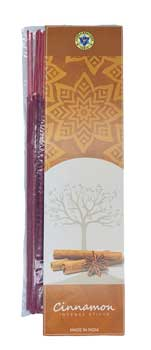
Cinnamon incense sticks
Price range: $2.75 through $9.85
A spicy classic of money work · Available in 3 sizes
Warm, spicy cinnamon stick incense, a money and success classic burned to draw prosperity, speed things up and warm passion.
Quick Uses
- Money drawing: burn a stick beside a green candle dressed with money oil, over a dollar bill folded toward you.
- Fast luck: pass your hands and wallet through the smoke before gambling, a sales call or a pitch.
- Business: waft the smoke inward through the shop door at opening time to draw customers.
- Passion: burn it with a red candle in love and lust spells to warm a cold relationship.
How to Use It
Hoodoo & Rootwork
- Money drawing: burn a stick beside a green candle dressed with money oil, with a dollar bill folded toward you underneath.
- Fast luck: light one before gambling, a sales call or a pitch, and pass your hands and wallet through the smoke.
- Business smoke: waft it inward through the shop door at opening time to draw customers.
Witchcraft & Folk Magick
- First of the month: a popular modern custom is to blow cinnamon into the home through the front door on the first day of each month; light a stick at the same time and carry it in.
- Passion: cinnamon is a heating spice, burned with a red candle in lust and love spells to warm up a cold relationship.
- Solar work: burn it on a Sunday for success, recognition and confidence.
A Simple Working
- On a Thursday or Sunday, dress a green chime candle with a little olive oil.
- Roll it in a pinch of ground cinnamon.
- Fold a banknote toward you and set the candle on top of it.
- Light the candle and one cinnamon incense stick from its flame.
- Say what money you need and what it is for.
- Let both burn out, then keep the banknote in your wallet and do not spend it.
Pairs Well With
- Cinnamon sticks: whole bark for mojo bags and money jars.
- Green chime candle: for money and prosperity.
- Money drawing oil: to dress candles and wallets.
- Pyrite: a stone kept on money altars.
What You Receive
Cinnamon stick incense in three options: a 20-stick pack, a Money Magnet manifest pack of 4 sticks, or a box of 6 hexagon packs with 20 sticks in each (120 sticks).
Origin & Lore
Cinnamon is the inner bark of trees in the genus Cinnamomum, traded for thousands of years as a costly spice and temple aromatic. Sweet cinnamon is listed in the holy anointing oil of Exodus, and in folk magick and hoodoo it is one of the great money and fast-luck ingredients, prized for its heat and its speed.
Herodotus was told that cinnamon came from the nests of giant birds, and that Arabians lured the birds down with chunks of meat so the nests would break and drop their sticks. The spice was precious enough to need a legend.
Herodotus, writing in the fifth century BCE, passed on the story of the cinnamon birds, and Pliny the Elder later dismissed it as a tale invented to raise the price. Exodus 30 lists sweet cinnamon among the spices of the holy anointing oil used to consecrate the Tabernacle and its priests.
Did You Know?
“True” cinnamon (Cinnamomum verum) comes mainly from Sri Lanka, while much of the cinnamon sold in North America is cassia, a related species from China and Southeast Asia.
| Weight | N/A |
|---|---|
| Option | 20 pack, Manifest stick, 4 pack, Box of 6 packs |
Related products


