
Dragon on Rock Leather Journal with Latch
$31.85
A Dragon-Guarded Book of Workings
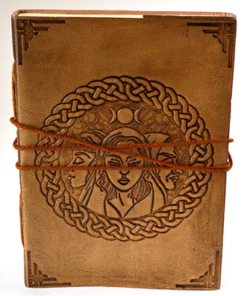
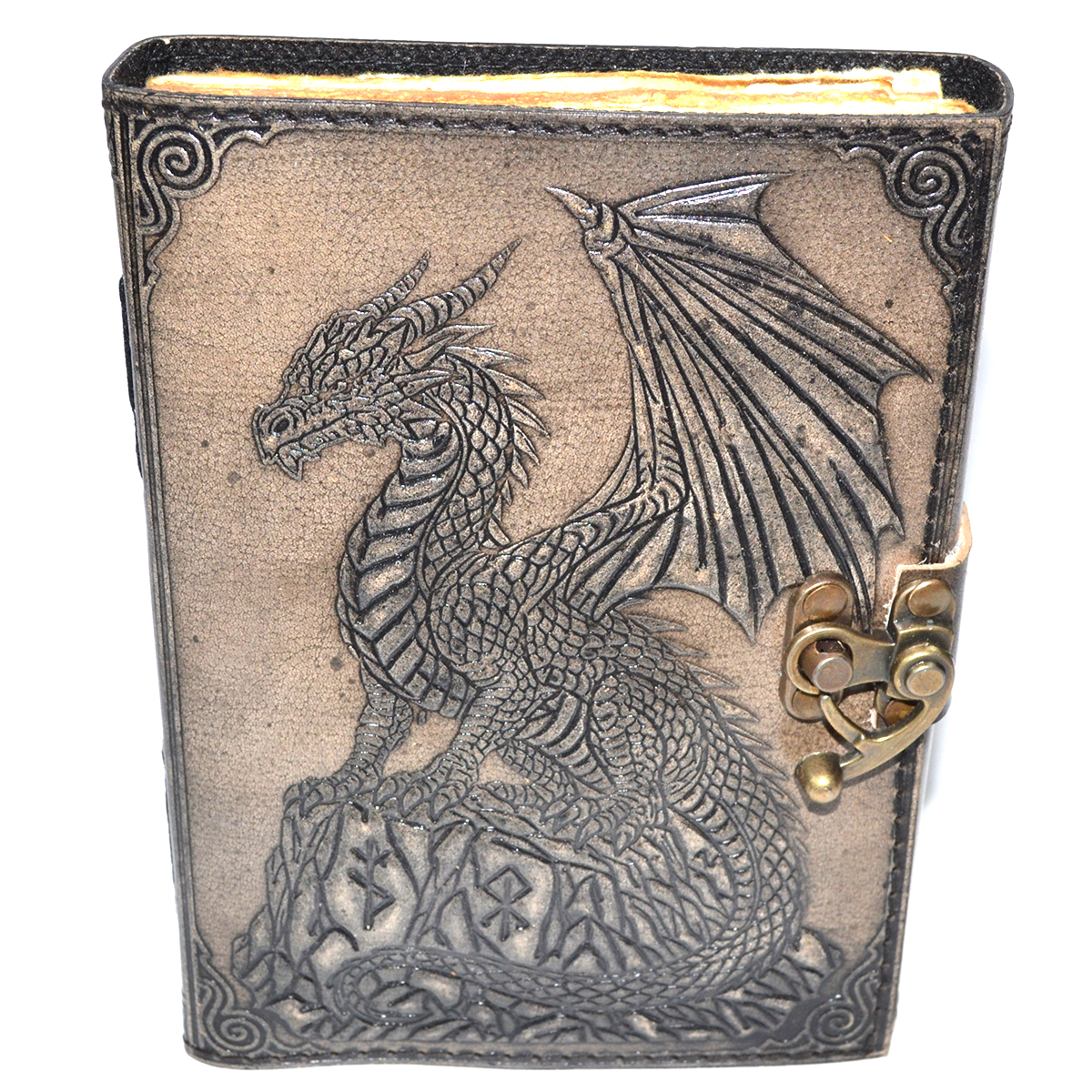
A latched leather journal with a winged dragon on a rock and Celtic knotwork on the back, used as a guarded grimoire for spells, rites and records.
Quick Uses
- Grimoire: Write your tested spells, rituals and correspondences into it as your working book.
- Protection Log: Record wards set around the home, when they were renewed and anything that tested them.
- Ritual Notes: Write the full script of a rite before you perform it, then add notes after.
- Sigil Pages: Draw and refine personal sigils on the textured pages.
How to Use It
Witchcraft & Folk Magick
- Keep your protection charms and ward recipes together in one book, with dates of each renewal.
- Use it to record the herbs and stones you work with and what each did for you.
Ceremonial & Occult Magick
- Write out the elemental quarters and their guardians, with the Fire quarter given its own pages under the dragon’s sign.
- Keep a ritual diary of date, hour, place and result for every ceremonial working.
Demonology & Black Magick
- Record each evocation: the seal drawn, the offerings of incense, candles or drink, and what came through.
- Read cards before and after a spirit working and copy the spread into the book so you can compare later.
- Design and test sigils, keeping the drafts and the final form side by side.
A Simple Working
- Choose a Tuesday, the day of Mars, and light a red candle with a little dragon’s blood resin on charcoal.
- Hold the closed journal in both hands and pass it through the smoke three times.
- Open to the inside cover and draw a simple protective sign: a pentagram, a bindrune or your own sigil.
- Write beneath it that this book is yours, guarded and kept for your work alone.
- Close the latch while the candle is still burning.
- Let the candle burn down safely, and keep the journal wrapped in dark cloth when not in use.
Pairs Well With
- Dragon’s blood, the red plant resin traditionally burned for strength and protection work.
- A red chime candle, for short Mars-day workings.
- A black tourmaline, to rest on the closed book as a guardian stone.
- A fine-nibbed pen and black ink, for clean seals and sigils.
What You Receive
One leather journal with a latch closure. The front cover shows a winged dragon perched on a rock and the back carries Celtic knotwork. Filled with aged, textured pages.
Origin & Lore
Hand-written grimoires were the working books of European magick. The Key of Solomon and other ceremonial texts survived for centuries mainly as manuscript copies, each scribe adding and adapting as he went.
Dragons in European lore were treasure guardians, from Fafnir coiled on his gold in the Norse sagas to the dragon guarding the golden apples of the Hesperides, which makes a dragon fitting watch over a private book.
Did You Know?
The word dragon comes through Latin draco from the Greek drakon, which originally meant a large serpent.
| Weight | 1.3 lbs |
|---|
Related products

All Journals