


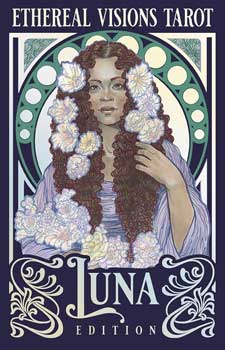
Ethereal Visions Tarot Luna Edition by Matt Hughes
$28.55
Silver-Foiled Art Nouveau Tarot
The Luna Edition of the Ethereal Visions Tarot, with revised artwork, iridescent silver foil and an expanded guidebook, chosen by readers who want a moonlit version of the deck.
Quick Uses
- Moon reading: Read on the night of the full moon, when the silver foil catches the light.
- Extra trumps: Work with the two added Major Arcana cards as turning points.
- Dream card: Choose a card for the dream you want and keep it by the bed.
How to Use It
Witchcraft & Folk Magick
- Read on Mondays, the Moon’s day, or at the full moon, with a bowl of water nearby.
- Use a card as the image of a lunar charm or dream pillow.
Ceremonial & Occult Magick
- The deck keeps the traditional structure for Golden Dawn and lunar correspondences.
- Use the images in lunar rites as gates for scrying and astral travel.
Demonology & Black Magick
- Draw before a night working with lunar or nocturnal spirits to check the timing.
- Ask a spirit to answer through the cards while its seal lies under the moonlight.
- Read again once the spirit has been licensed to depart, to see what changed.
A Simple Working
- On a full-moon night, set a bowl of water where the moonlight falls on it.
- Light a white or silver chime candle and burn a pinch of mugwort.
- Pass the deck over the bowl and shuffle while asking your question.
- Draw four cards for the four phases of the moon: what begins, grows, ripens and wanes.
- Read them with the expanded guidebook.
- Pour the water onto plants or earth in the morning.
Pairs Well With
- Mugwort: the lunar herb of dreams and sight.
- A moonstone: kept with the deck between readings.
- White chime candles: for a quiet moonlit reading.
- A tarot cloth: to protect the foiled cards.
What You Receive
One tarot deck of 80 cards with iridescent silver foil stamping and a 140-page expanded, full-colour guidebook.
Origin & Lore
Tarot began as a card game in fifteenth-century Italy and became a divination tool in late eighteenth-century France. The Moon trump has been part of the deck from the earliest Italian cards.
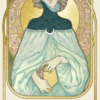
This Luna Edition of Matt Hughes’ Art Nouveau deck keeps its hand-drawn, hand-coloured images and two added Major Arcana cards, with revised artwork reflecting greater diversity.
Did You Know?
Lady Frieda Harris painted the cards of Aleister Crowley’s Thoth Tarot between 1938 and 1943, working to Crowley’s detailed instructions.
| Weight | 1.1 lbs |
|---|
Related products


Crystal Balls