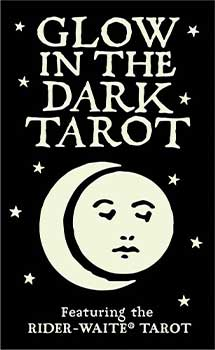
Glow in the Dark Tarot
$29.65
Rider-Waite Art That Glows
The classic Pamela Colman Smith imagery printed so it glows after light exposure, made for readers who work by night and by candle.
Quick Uses
- Night Readings: Charge the cards under a lamp, then read in full darkness with only the glow to guide you.
- Dream Question: Draw one card before sleep, set it by the bed and let its glow be the last thing you see.
- Learning Deck: Use the upright and reversed meanings in the guidebook to drill the standard Rider-Waite symbolism.
- Spread Practice: Try the spreads in the booklet to build confidence with multi-card layouts.
How to Use It
Witchcraft & Folk Magick
- Read at midnight on the full or dark moon, when many witches prefer to divine.
- Draw for each person at a Samhain table and leave the glowing cards out as a vigil for the night.
Ceremonial & Occult Magick
- Use the familiar Smith symbolism for card meditation: fix your eyes on the glowing image, close them, and work with the afterimage.
- Pick a trump that matches the planetary hour and keep it lit on the altar while you work.
Demonology & Black Magick
- Read in a darkened temple before and after an evocation without breaking the dark with a lamp.
- Ask a spirit to answer through one card drawn in the dark, then light the candle to see what it chose.
- Lay the Devil or the Tower glowing at the centre of a hex working as its focal image.
A Simple Working
- Hold the deck under a bright lamp for a minute or two to charge the cards.
- Turn out all lights and light only a single black chime candle in a safe holder, then snuff it once your eyes adjust.
- Shuffle in the dark and draw three cards for past, present and what is approaching.
- Read the glowing images without the booklet; trust what stands out first.
- Relight the candle and check the guidebook meanings against your impressions.
- Record the spread and any dreams that follow that night.
Pairs Well With
- Mugwort: a traditional herb burned or kept under the pillow for dream and night divination.
- Black chime candles: small enough to burn through a single night reading.
- Moonstone: a Moon stone often kept with decks used for nocturnal work.
- Dream journal: for noting what follows a bedtime draw.
What You Receive
One tarot deck of 78 cards that glow after exposure to light, with a 56-page guidebook including upright and reversed meanings and tarot spreads.
Origin & Lore
Tarot was first a fifteenth-century Italian card game; its divinatory use spread from France from the 1780s onward. The deck most English-speaking readers learn on was designed by Arthur Edward Waite and illustrated by Pamela Colman Smith, both members of the Hermetic Order of the Golden Dawn, and published in 1909.
This edition keeps Smith’s artwork and her hand-lettered titles, so every symbol a reader learns here carries straight over to the wider Rider-Waite family of decks.
Did You Know?
Pamela Colman Smith signed many of her tarot designs with a small curling monogram of her initials, which can still be spotted tucked into the corners of the cards.
| Weight | 0.8 lbs |
|---|
Related products