Gold Ganesha Statue (5 3/4″)
$17.55
The Remover of Obstacles
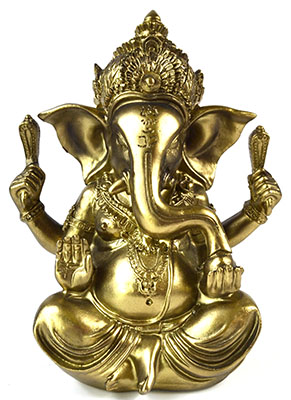
A gold-toned statue of Ganesha, the elephant-headed lord of beginnings, kept by those who want his blessing at the threshold of every new venture.
Quick Uses
- Threshold Guardian: Place him near your front door or facing the entrance of your workroom so he greets what comes in.
- New Ventures: Set him beside paperwork for a new job, business or move and ask his blessing before you begin.
- Study Altar: Keep him on your desk while you study or write, as patron of learning and letters.
How to Use It
Witchcraft & Folk Magick
- Give him the first place on your altar and greet him before any other spirit or deity in your rite.
- Lay a small offering of sweets or a flower at his feet on the day you start something important.
Hoodoo & Rootwork
- Set him behind a road opener candle when the way forward feels blocked.
- Rest a petition for a new job or contract beneath his base for seven days.
Ceremonial & Occult Magick
- Make him the opening invocation of a working, since by custom Ganesha is honoured first.
- Keep him in view during study of sacred texts and ask for clarity of mind.
A Simple Working
- On a Wednesday morning, set the statue on a clean cloth facing you.
- Light a yellow chime candle beside him.
- Write the obstacle in your way on a slip of paper.
- Fold the paper and place it under the statue.
- Offer a small sweet or a marigold at his feet and name what you want opened.
- Let the candle burn down, then leave the paper beneath him until the matter moves.
Pairs Well With
- Road Opener Oil: For dressing candles set before him when paths are blocked.
- Yellow Chime Candles: A bright, simple offering light for new beginnings.
- Sandalwood Incense: A traditional fragrance offered in Hindu worship.
- Citrine: A sunny stone to sit at his feet for success.
What You Receive
One gold-toned Ganesha statue in cold cast resin, 5 3/4″ tall.
Origin & Lore
Ganesha’s original and enduring role is as Vighneshvara, lord of obstacles, who both removes and places hindrances. Hindus invoke him first at the start of rituals, weddings, journeys, exams and new businesses.
He is the son of Shiva and Parvati, recognised by his elephant head, rounded belly and the mouse he rides. In one well-known legend he served as the scribe who wrote down the Mahabharata as the sage Vyasa recited it, which is why he is also a patron of letters and learning. His great festival, Ganesh Chaturthi, is celebrated across India each late summer.
Did You Know?
Ganesha is often shown with one broken tusk, which some stories say he snapped off to use as a pen when writing the Mahabharata.
Related products