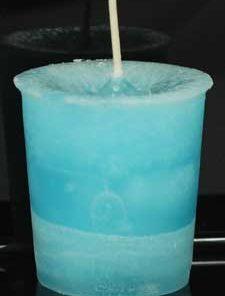
Hex Craft Destroyer jar candle
$18.65
A jar candle for breaking hexes
A scented jar candle burned to break hexes and crossed conditions and keep further ones off you.
Quick Uses
- Uncrossing: take an uncrossing or hyssop bath, then light the candle while still damp.
- Seven days: relight it on consecutive days, reading Psalm 37 or Psalm 70 over it each time.
- Mirror return: stand the jar before a small mirror facing away from you to turn back what was sent.
- Cord cutting: tie a black thread around the jar, burn the candle and cut the thread on the last night.
How to Use It
Hoodoo & Rootwork
- Uncrossing: bathe in an uncrossing or hyssop bath, then light the candle while still damp and let it burn as you dress.
- Seven-day sequence: relight it on consecutive days, reading Psalm 37 or Psalm 70 over it each time, as many Southern practitioners do for crossed conditions.
- Disposal: once spent, take the empty jar to a crossroads or a running stream and leave it behind without looking back.
Witchcraft & Folk Magick
- Mirror return: stand the jar in front of a small mirror facing away from you so whatever was sent is turned back toward its source.
- Cord cutting: tie a black thread around the jar, burn the candle, and cut the thread on the last night.
A Simple Working
- Take a bath with a handful of sea salt dissolved in it, pouring the water over your head as you finish.
- Dress in clean clothes and set the candle on a plate surrounded by a ring of salt.
- Light it and say: “Whatever was laid on me is lifted, whatever was sent to me goes back.”
- Let it burn for at least an hour while you sit quietly beside it.
- Relight each day until it is spent.
- Sweep up the salt and throw it, with the empty jar, away from your home.
Pairs Well With
- Uncrossing oil: to dress the jar and your own head and feet.
- Hyssop: the classic herb for a cleansing bath before the working.
- Sea salt: to ring the candle and bathe in.
- A small mirror: to reflect sent work back where it came from.
What You Receive
One scented jar candle for hex-breaking and protection.
Origin & Lore
Folk magick everywhere has its ways of undoing harm sent by another person, from witch bottles buried under English hearths to the uncrossing baths and candles of the American South. A hex-breaking candle is the simplest of these: a steady flame set to burn through whatever has been laid on you, then to stand guard so it does not come back.
When a run of bad luck sets in that no ordinary cause explains, the old rootworkers had a word for it: you have been crossed.
In the late 1930s the folklorist Harry Middleton Hyatt interviewed around 1,600 people across the American South about conjure, and a great share of what they described was uncrossing: baths, candles, psalms and tricks for lifting work laid by an enemy. “Hex” itself comes into English from the Pennsylvania Dutch, from the German Hexe, witch.
Did You Know?
A 17th-century witch bottle dug up in Greenwich, London, in 2004 still held urine, bent nails, hair and a nail-pierced leather heart, the classic kit for turning a witch’s spell back on her.
| Weight | 2 lbs |
|---|
Related products