


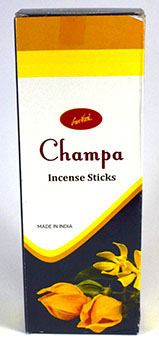
Nag Champa Hand-Rolled Incense Sticks (6 Boxes of 20)
$9.85
Hand-Rolled Nag Champa by the Case
A full case of hand-rolled Nag Champa from India, the rich devotional scent practitioners burn so often that a single box never lasts.
Quick Uses
- Daily Practice: Burn one stick at the same hour every day to anchor a devotional routine.
- Group Ritual: Light several sticks around the circle for a coven or group working.
- Yoga and Meditation: Burn one at the start of each session to settle the room.
- Spare Supply: Keep a box with your travel altar kit.
How to Use It
Witchcraft & Folk Magick
- Light a stick at each quarter of the circle when casting for a group sabbat.
- Burn Nag Champa every evening for a lunar month while working a long blessing spell for a friend.
Hoodoo & Rootwork
- Keep a box beside the ancestor altar and burn a stick every Sunday when refreshing the water glass.
- Burn it during a nine-day novena-style candle working, one stick each day as the candle is lit.
Ceremonial & Occult Magick
- Use Nag Champa as the house incense for a regular meditation group, so the scent becomes a trigger for focus.
- Burn it during long devotional workings to a deity, renewing the stick whenever one burns out.
Demonology & Black Magick
- Offer a stick at every meeting with a spirit you keep a long-term pact or working relationship with.
- Burn it in the room after spirit work to bring the space back to a settled, homely feel.
A Simple Working
- Set a seven-day white candle on the ancestor altar.
- Place a glass of fresh water and a photo or name of the ancestor beside it.
- Light the candle and one Nag Champa stick on the first evening.
- Speak to the ancestor about one matter where you need their help.
- Return every evening for seven days, lighting a fresh stick each time.
- Change the water on the fourth day.
- On the seventh evening, thank them and pour the water outside.
Pairs Well With
- Seven-Day Candles: Suit longer devotional workings with daily incense.
- Ancestor Photos: Give the smoke a clear focus on the altar.
- Mala Beads: For repeated mantra with the smoke.
- Brass Incense Holder: A sturdy holder for daily use.
What You Receive
One case of 6 individual boxes of Nag Champa incense, with 20 sticks in each box, for 120 sticks in total. Hand-rolled in India.
Origin & Lore
Nag Champa’s first purpose is devotional. It was made as an incense for Indian temples, ashrams and home shrines, and is named for the champa flower, Magnolia champaca, whose blossoms are offered to deities.
Hand-rolled Nag Champa became widely known outside India from the 1960s onward, carried home by travellers who had spent time in ashrams, and it has since become one of the most recognised incense scents in the world.
Did You Know?
Champa flowers are traditionally worn in the hair by women in parts of South India and are offered in temples across the region.
Related products


