



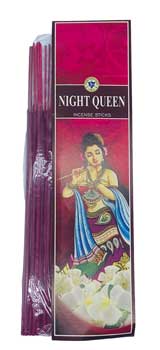
Night Queen Incense Sticks (20 Pack)
$2.75
Sweet Smoke After Dark
A highly fragrant Night Queen stick incense from India, a heady night-time floral that practitioners burn for seduction, glamour and dream work.
Quick Uses
- Night Rites: Light a stick after sunset to open any working done in darkness.
- Glamour: Burn one while dressing and doing your make-up before going out.
- Dream Altar: Burn a stick in the bedroom early in the evening for dream work.
- Seduction: Light one when you want a room to feel inviting and lush.
How to Use It
Witchcraft & Folk Magick
- Burn Night Queen at a dark moon rite to honour the hidden, night-blooming side of the year.
- Light a stick while enchanting a hand mirror for glamour, speaking to your reflection by candlelight.
Hoodoo & Rootwork
- Burn it with a red candle in an attraction working performed after midnight.
- Smoke a love mojo bag with it before sleeping with the bag under your pillow.
Ceremonial & Occult Magick
- Use it as an evening incense in Lunar workings and in rites of the night sky.
- Burn a stick before astral projection practice to mark the shift from day mind to night mind.
Demonology & Black Magick
- Offer it to spirits of the night and of seduction when calling them after dark.
- Burn it while drawing a sigil for desire in red ink under a single candle.
A Simple Working
- After sunset, sit before a mirror lit only by a red tealight.
- Light one Night Queen stick and place it beside the mirror.
- Look into your own eyes and name the quality you want others to see in you.
- Pass a small hand mirror or compact through the smoke three times.
- Say your chosen word once for each pass.
- Let the tealight burn out.
- Carry the small mirror with you as a glamour charm.
Pairs Well With
- Red Tealights: For glamour and seduction work by night.
- Moonstone: A night stone for lunar and dream rites.
- Hand Mirror: The classic tool for glamour work.
- Love Oil: Dress candles and pulse points to match the smoke.
What You Receive
One pack of 20 Night Queen incense sticks, made in India.
Origin & Lore
Night Queen takes its name from raat ki rani, the Hindi name for the night-blooming jasmine, Cestrum nocturnum, a shrub whose small pale flowers release an intense sweet perfume after dark. The incense is named in the spirit of that flower, a rich evening floral rather than a botanical extract claim.
Night-blooming flowers have long been tied in magickal correspondences to the Moon, love and dreams, and practitioners use night florals to set the tone for workings that belong to darkness.
Did You Know?
The night-blooming jasmine, Cestrum nocturnum, is not a true jasmine: it belongs to the nightshade family and is native to the West Indies and Central America.
Related products


