



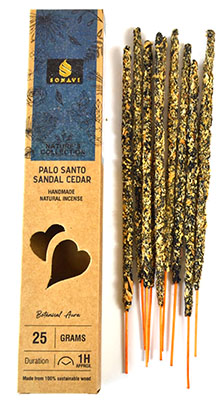
Palo Santo, Sandalwood and Cedar Incense Sticks (25g)
$3.25
Three Sacred Woods in One
A handmade natural blend of palo santo, sandalwood and cedar, three woods long burned for cleansing and blessing, joined in a single stick.
Quick Uses
- Space Clearing: Burn a stick and walk its smoke clockwise through every room.
- Bless the Altar: Light one when setting up or rearranging your altar.
- Protect the Door: Burn a stick at the threshold after an unwelcome visitor.
How to Use It
Witchcraft & Folk Magick
- Burn it to cleanse and bless a new home before you unpack.
- Pass wands, athames and other tools through the smoke to consecrate them.
- Light a stick before casting a circle as the opening purification.
Hoodoo & Rootwork
- Burn it at the ancestor altar with a glass of water as a clean, woody offering.
- Smoke a protection mojo bag with it before you carry it for the first time.
Ceremonial & Occult Magick
- Use it as a temple incense for consecration of talismans and tools.
- Burn it during the opening banishing of a ritual, carrying it to each quarter.
Demonology & Black Magick
- Burn a stick at the edge of the circle as protective smoke during evocation.
- Use it after a working to clear residue and close the space cleanly.
A Simple Working
- Open a window in the room you want to cleanse.
- Light a white candle and one stick from its flame.
- Start at the corner farthest from the door and move clockwise around the room.
- Pause at each corner and say: only what is welcome may stay.
- Finish at the open window and wave the smoke out with your hand.
- Set the stick in a holder by the door and let it burn down.
Pairs Well With
- Palo Santo Sticks: For a stronger, pure palo santo smoke.
- Cedar Tips: To add to protection sachets and bundles.
- Black Tourmaline: A warding stone for doorways and windowsills.
- White Sage, Lavender and Eucalyptus Incense: Another cleansing blend in the same 25 gram range.
What You Receive
One 25 gram pack of handmade natural incense sticks blending palo santo, sandalwood and cedar, made in India. Each stick burns for approximately one hour.
Origin & Lore
Palo santo, Spanish for holy wood, is the wood of Bursera graveolens, a tree of the dry forests of Ecuador, Peru and nearby regions, long burned there for cleansing and blessing. Sandalwood is the classic sacred wood of Indian worship, and cedar has been burned for purification in many cultures, from the ancient Near East to North America.
This stick is a blend of the three, so it carries a little of each tradition: the sweet, resinous palo santo, the soft sandalwood and the dry, protective cedar.
Did You Know?
Traditionally, palo santo is gathered from dead wood that has lain for years, because the aromatic oils develop as the wood ages.
Related products


